


 русский
 Español
 عربى

Foam Cannon Car Washing: How Foam Pre-Washing Works and What to Check Before Buying
 2026.09.18
 Industry News
Content
- 1 What a Foam Gun Actually Does During the Wash
- 2 Foam Gun vs Foam Cannon: Which One Fits Your Driveway
- 3 How to Wash a Car With a Foam Gun, Step by Step
- 4 Soap, Water Hardness, and Flow: Details That Decide Foam Quality
- 5 Five Mistakes That Waste the Pre-Wash
- 6 After the Rinse: Drying, Then the Interior
- 7 Wash Day Is Also the Right Time to Check Tire Pressure
- 8 What to Check Before Buying a Foam Gun
Most of the swirl marks on a daily driver do not come from the shampoo. They come from the first minute of the wash, when a mitt meets dry paint and drags along whatever grit the road left behind. A foam gun attacks that problem at the source: it blends car shampoo with hose water and lays a thick, clinging blanket of foam over the entire vehicle, so loose dirt is lifted and lubricated before anything touches the surface. For households without a pressure washer, it is also the most practical entry into foam washing, because it runs on an ordinary garden hose and spigot. The short version: if you wash your car by hand more than a few times a year, a foam gun is the single most useful upgrade to that routine. This guide covers how the tool works, how it compares with a foam cannon, how to run a proper wash, and where the step fits into a complete car care session.
What a Foam Gun Actually Does During the Wash
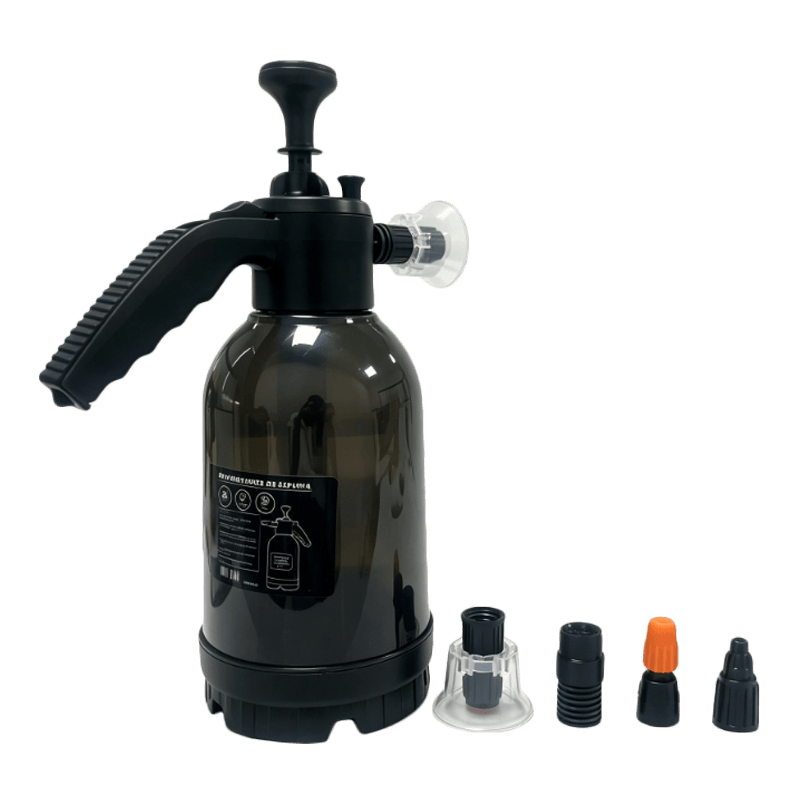
A foam gun siphons concentrated shampoo from its bottle, mixes it with the hose stream, and aerates the blend through a fine mesh insert, producing foam that clings to vertical panels instead of running straight off. That cling time is the whole point. While the foam sits, its surfactants surround soil particles and loosen their grip on the paint, and gravity then pulls the foam down the body, carrying a good share of the dirt with it.
Testing of foam applicators reaches a consistent conclusion: powered foam covers a vehicle faster, and in greater volume, than a bucket-and-mitt pre-soak. That matters because the pre-wash is where most swirl risk is removed. There are limits, though. Foam lifts loose road film, dust, and pollen; it will not remove bonded contamination such as tar, tree sap, or an aged wax layer. Those still need a mitt and a dedicated decontamination step. A foam gun reduces how much work the contact wash has to do; it does not replace the contact wash.
Foam Gun vs Foam Cannon: Which One Fits Your Driveway
The real difference is the power source. A foam cannon mounts on a pressure washer wand and uses pressurized flow to whip up a dense, shaving-cream-like foam. A foam gun does the same job on household water pressure alone. The trade-off is density and dwell: cannon foam is thicker and hangs on longer, while gun foam is wetter and runs off sooner, which simply means working faster or in sections on a warm day. Flow is the other dividing line. Most foam cannons need around two gallons per minute to perform as designed, and many budget electric pressure washers fall short of that figure. A foam gun sidesteps the problem entirely, because it was never counting on that pressure in the first place.
| Aspect | Foam gun (garden hose) | Foam cannon (pressure washer) |
|---|---|---|
| Power source | Household spigot and garden hose | Pressure washer with adequate flow |
| Foam texture | Wetter foam that clings briefly and runs down quickly | Denser foam with a longer dwell time |
| Extra equipment | None beyond the hose | A pressure washer; roughly 2 GPM flow for best results |
| Upfront cost | Low | Higher once the washer itself is counted |
| Best fit | Regular hand washers without a pressure washer | Detailers who already own a suitable washer |
How to Wash a Car With a Foam Gun, Step by Step
The method is straightforward, but the order and the timing are what separate a safe wash from a sloppy one.
- Park in the shade and let the panels cool. Foam on hot paint dries within a minute and becomes difficult to rinse cleanly.
- Rinse the car with plain water first to knock off the coarsest grit before any foam goes on.
- Load the bottle: water first, then shampoo. Follow the shampoo label where it specifies a dilution; where it does not, roughly one part shampoo to ten parts water in the bottle is a workable start, and the gun's dial can be tuned from there.
- Foam the vehicle from the roof down, overlapping each pass so no panel is left dry. Let the foam dwell three to five minutes, and re-apply any section that starts to run bare.
- Contact wash with the two-bucket method while the surface is still lubricated: one bucket with fresh shampoo solution, one to rinse the mitt. Keep a separate mitt for the lower panels and wheels, which carry the heaviest grit.
- Rinse top-down before the loosened film dries back onto the paint.
- Dry immediately with a plush microfiber towel, working lightly rather than pressing hard; dragging a saturated towel across damp grit is how many wash-day scratches happen.
Wheels deserve their own bucket and brushes, washed last so brake dust never travels back to the paint.
Soap, Water Hardness, and Flow: Details That Decide Foam Quality
Use a pH-neutral car shampoo or a dedicated snow-foam concentrate. Dish soap is the classic false economy: it strips or dulls existing wax and sealant layers and can dry out rubber trim, so it costs more than it saves.
Hard water is a quieter issue. Its minerals slightly reduce lather quality and leave spots as the rinse dries, but they do not stop a foam gun from working; the fix is to rinse thoroughly and dry promptly rather than letting the car air-dry in the sun.
Flow matters on the hose side too. A gun needs an unrestricted supply: a kinked hose, a half-closed spigot, or a restrictive nozzle will starve the mesh insert and thin the foam. If output suddenly looks weak, check the water path before blaming the soap.
Five Mistakes That Waste the Pre-Wash
- Washing in direct sun or on hot panels, which flash-dries the foam and leaves residue rings.
- Letting foam sit until it dries. Three to five minutes of dwell is enough; repeated light applications beat one heavy one.
- Substituting dish detergent for car shampoo.
- Treating the foam as the whole wash. Foam leaves bonded film behind, which shows up the moment the car dries and water stops sheeting off evenly.
- Packing the gun away dirty. Dried shampoo clogs the mesh insert and weakens the next session, so flush the bottle and head with clean water after each use.
After the Rinse: Drying, Then the Interior
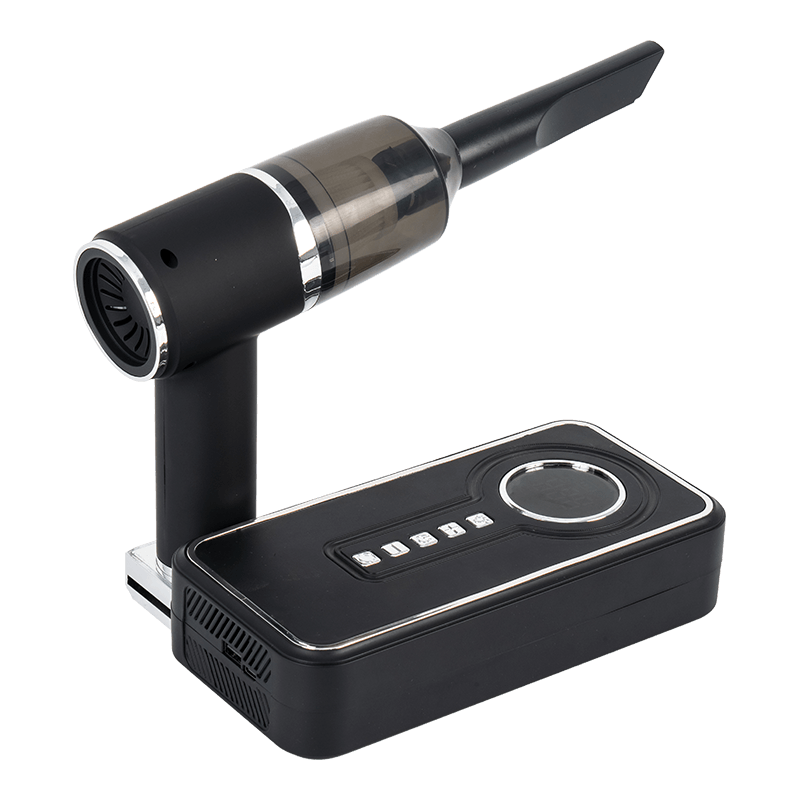
A foam wash finishes the paint, not the car. Dust on the dashboard, grit in the seat seams, and crumbs under the mats survive any driveway session, and a freshly washed exterior makes them more noticeable, not less. This is where a cordless handheld vacuum earns its place in the routine: no cord dragging across wet paint or through the door sill, enough suction for mats and upholstery, and a footprint small enough to live in the glovebox or trunk. For regular interior detailing, a compact unit designed for car interiors beats hauling a household machine out to the driveway.
 JL-003 Portable Wireless Mini Vacuum Cleaner for CarThe JL-003 Portable Wireless Mini Vacuum Cleaner for Cars combines powerful suction with lightweight portability. The body features a durable and stylish design with a...View Product →
Wash Day Is Also the Right Time to Check Tire Pressure
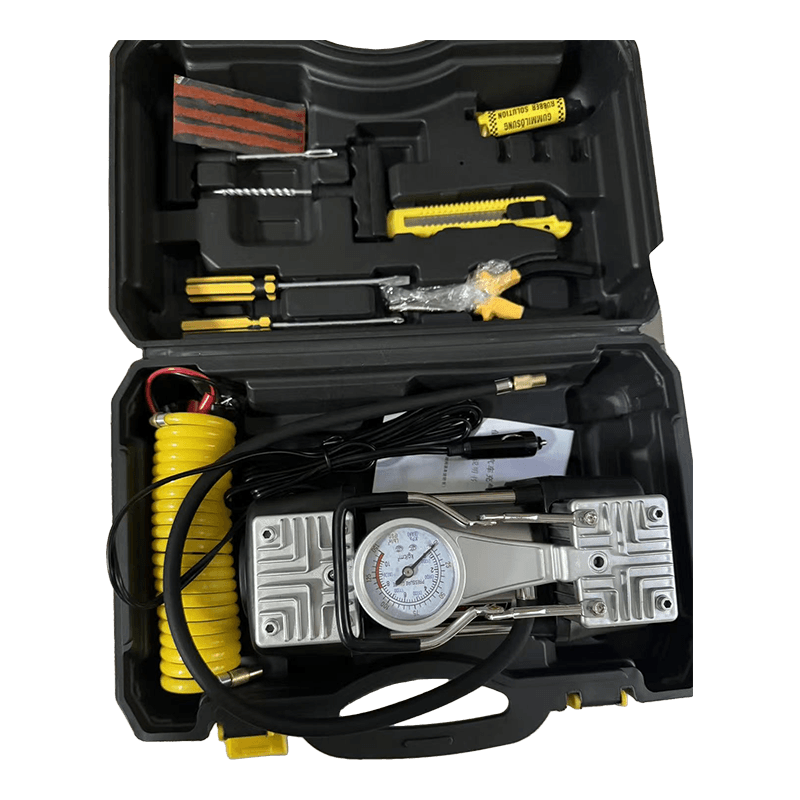
The car is parked, cool, and fully accessible, which makes wash day the natural checkpoint for tire pressure. Cold readings, taken before the tires have been driven hard, are the accurate ones, and the correct figure is on the placard in the driver's door jamb, not the maximum molded into the sidewall. A small wired inflator with an analog dial gauge lives comfortably in a garage or trunk, tops up a low tire in a few minutes, and removes the guesswork of judging pressure by eye. For a closer look at how these pumps work and how to choose between wired and cordless models, our guide to what an automotive air compressor tire inflator actually does covers the details.
 CXF-211 Car Air Pump with PointerThe CXF-211 Car Air Pump with Pointer is a high-efficiency, durable car air pump designed specifically for car owners. Made of metal and ABS materials, it ensures robu...View Product →
What to Check Before Buying a Foam Gun
For home users
- Connector compatibility: confirm the gun's inlet matches your hose and spigot fittings, since quick-connect standards differ between markets.
- Bottle size: a one-litre bottle normally covers a mid-size sedan in one pass; smaller bottles mean mid-wash refills.
- Build quality: an adjustable foam dial and a well-made mesh insert, ideally with brass fittings, outlast all-plastic heads.
- Soap compatibility: the gun should handle both pH-neutral shampoos and thicker snow-foam concentrates.
- Frequency of use: an occasional washer is fine with a basic gun; a weekly washer without a pressure washer may eventually graduate to a cannon.
For distributors and retail buyers
The same criteria translate directly into sourcing checks: consistency of foam output between units, tolerance control in the mixing insert, material choices at the fittings, and packaging suited to the channel. It is the same SKU logic our own inflator line follows, with identical hardware offered in color-box and toolbox packaging, and it applies just as much to wash-day accessories.
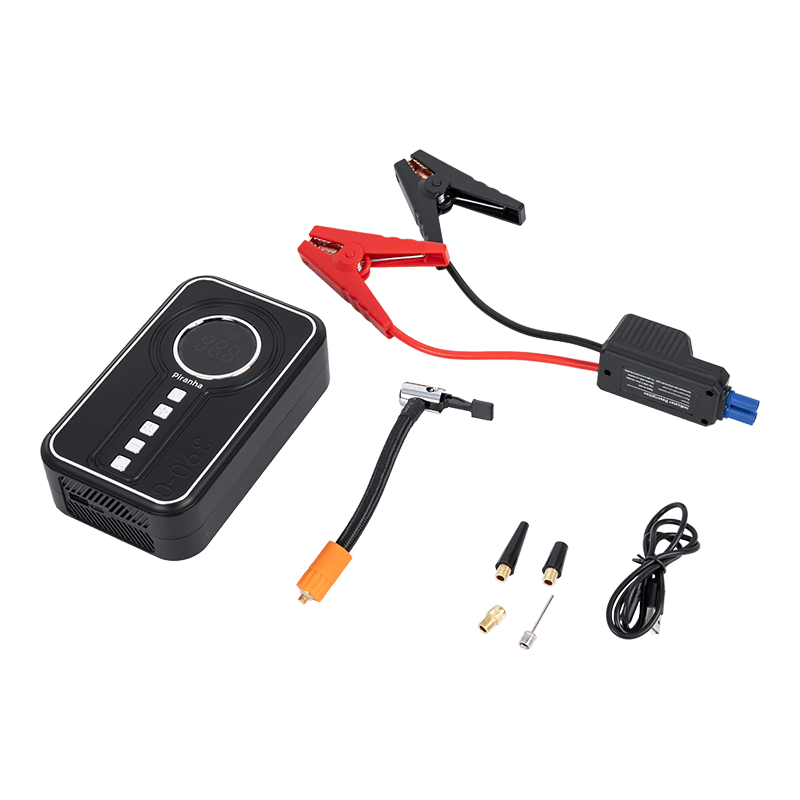
A foam gun will not turn a driveway wash into a professional detail, and it does not need to. Its job is narrow: put a layer of lubricated foam between the grit and the paint before a mitt ever touches the car, using equipment most households already own. Pair it with prompt drying, a proper interior pass, and a tire pressure check while the car sits cool, and wash day stops being the source of next month's swirl marks. For drivers short on storage, a combo unit that pairs an inflator with a vacuum in one device covers two of those jobs at once. And if you are a retailer or distributor building a car care assortment rather than a driveway kit, you are welcome to reach our team through our contact page.
 JL-005 Car-mounted air pump and vacuum cleaner combo machineThe JL-005 Car-mounted air pump and vacuum cleaner combo machine is a high-efficiency car tool that integrates inflation, cleaning, and emergency lighting, designed sp...View Product →

Recommended Products
Latest News
Contact Us
LET'S START COLLABORATING
Jialiang Electrical Appliance develops high-quality automotive and household products, including inflators, vacuum cleaners, bottle warmers, and small appliances. We aim to enhance daily life with innovative, user-focused solutions.
Product
Jump Starter and Air Compressor Solar LED Reflective Warning Triangle Light Wireless Mini Vacuum Cleaner Baby Milk Shaker Foam SprayerSTAY CONNECTED
 +86 13956690933
 [email protected]
 No. 67, Mojian Hill, Ditang Street, Yuyao City, Ningbo City, Zhejiang Province, China.
MOBILE
Copyright © Yuyao Jialiang Electrical Appliance Co., Ltd. All Rights
Reserved
 Custom Electric Household Appliances Manufacturers