


 русский
 Español
 عربى

Rechargeable Light for Power Outage: How to Choose One and Keep It Ready
 2026.10.16
 Industry News
Content
- 1 Why Rechargeable Beats Candles, Disposables, and Phone Screens
- 2 How to Judge a Rechargeable Light Before You Buy
- 3 Match the Light to the Room, Not Just to the Outage
- 4 A Ten-Minute Routine That Keeps Rechargeable Lights Ready
- 5 Rechargeable Gear We Build for the Same Moments
- 6 Questions We Hear Most Often
Most power outages are not dramatic. They are quiet: the refrigerator stops humming, the router blinks out, and a room you knew by heart suddenly has edges you cannot see. In that moment, the most useful object in the house is not a generator or a neatly printed emergency plan. It is a light that is already charged and already within reach.
We design and manufacture rechargeable emergency products, so we spend a lot of time thinking about exactly that moment. This guide covers how to choose a rechargeable light for a power outage, how to keep it ready without babysitting it, and how to spread light through a home instead of pooling it all in one corner.
Why Rechargeable Beats Candles, Disposables, and Phone Screens
Candles still appear in blackout advice, and the appeal is easy to understand. They are cheap, they are already in a drawer, and they glow. They also mean an open flame in a dark house with children, pets, and furniture, and their light is barely enough to cross a hallway safely. The fire risk alone is why we stopped recommending them.
Disposable flashlights and loose batteries fail in a quieter way. They work perfectly until the evening you need them, at which point the cells have leaked, corroded, or simply drained in a drawer. Almost every household owns a flashlight that produces a dull orange coin of light and nothing else.
Phones are the modern fallback, and they are the most expensive one. Using a phone as a lantern drains the battery you will want for calls, weather alerts, and messages from family. A dedicated rechargeable light costs far less than the phone it protects.
Rechargeable lighting also adds one advantage no candle can match: you can refill it from almost anything. A power bank, a car USB port, a laptop, or a small folding solar panel will all push a charge back in during an outage that lasts more than a single night.
How to Judge a Rechargeable Light Before You Buy
Packaging on emergency lighting can be generous with adjectives and vague with numbers. Four details do the real work.
Output and spread
Lumens describe how much light a lamp produces, not how far it throws or how evenly it fills a room. During an outage, even coverage across a table or ceiling matters more than a bright hotspot. A diffused 300-lumen lantern will usually beat a 900-lumen narrow beam for lighting a kitchen.
Runtime and battery capacity
Stated runtime is almost always measured on the dimmest setting, which is fine, because low mode is how you will actually use a light during a long outage. Compare capacity instead: milliamp-hours or watt-hours give you a fairer sense of how much energy the light truly stores.
Charging options
USB-C has become the default and should be your baseline. Solar trickle charging is a useful backup for multi-day outages, a 12-volt car adapter matters if the light lives in a vehicle, and hand cranks are a last resort rather than a plan.
Build quality and safe chemistry
Look for a stated IP rating, a housing that does not become too hot to hold, and a battery chemistry you recognize. Pass-through charging, which lets a light run while it is plugged in, is genuinely useful for a hallway or bathroom during a long evening.
The table below gives a rough sense of how the common rechargeable formats compare.
| Light format | Typical output | Best room or task | Runtime per charge |
|---|---|---|---|
| USB rechargeable LED bulb | 300 to 600 lumens | Hanging overhead to light a whole room | 4 to 8 hours |
| LED lantern | 200 to 800 lumens | Kitchen table or central family space | 6 to 30 hours on low |
| Rechargeable work light | 500 to 2000 lumens | Garage, stairwell, or repair work | 3 to 10 hours |
| Rechargeable headlamp | 100 to 400 lumens | Hands-free tasks, hallways, reading | 4 to 12 hours |
| Solar LED warning light | 50 to 200 lumens | Marking a driveway, vehicle, or doorway | All night after a full solar charge |
Match the Light to the Room, Not Just to the Outage
One bright light in the living room leaves the stairs and bathroom dark, and that is where most blackout bumps and bruises happen. A more practical approach is to think in zones.
- Central living space: a diffused lantern or rechargeable bulb that bounces light off the ceiling, so the whole room stays usable.
- Stairs and hallways: a small motion-sensing light, or a low-output lamp left running all evening.
- Bedrooms and children's rooms: a warm, dimmable light that will not wake anyone or destroy night vision.
- Kitchen: a work light or an overhead rechargeable bulb, because preparing food needs even light and both hands.
- Garage, car, and driveway: a rechargeable area light, plus something reflective or flashing to mark a vehicle or an open hood.
- Outdoor tasks and tools: a headlamp frees both hands, while a magnetic work light sticks to a panel while you work.
A Ten-Minute Routine That Keeps Rechargeable Lights Ready
Rechargeable gear only fails when it sits forgotten for a year. A short routine twice a year solves that problem completely.
- Charge every light to roughly 60 to 80 percent before storing it. Long-term full charge and complete discharge both age lithium cells.
- Top up every two to three months, then unplug. A calendar reminder in spring and autumn covers most homes.
- Store lights somewhere cool and dry, away from direct sun and damp basements.
- Test the switch and every mode while you are holding it, not in the dark later.
- Keep one light in a fixed, obvious spot on each floor, and tell everyone where it lives.
- Pair each light with a charged power bank, so one outage does not consume the other's energy.
Rechargeable Gear We Build for the Same Moments
Our workshop in Yuyao, Zhejiang, sits inside a region that has been manufacturing household appliances for export for decades. Our own range is not built around living-room lanterns. It is built around the smaller emergency moments that tend to arrive together with an outage: a car that needs marking at the roadside, a battery that needs a jump, a tire that needs air in the dark.
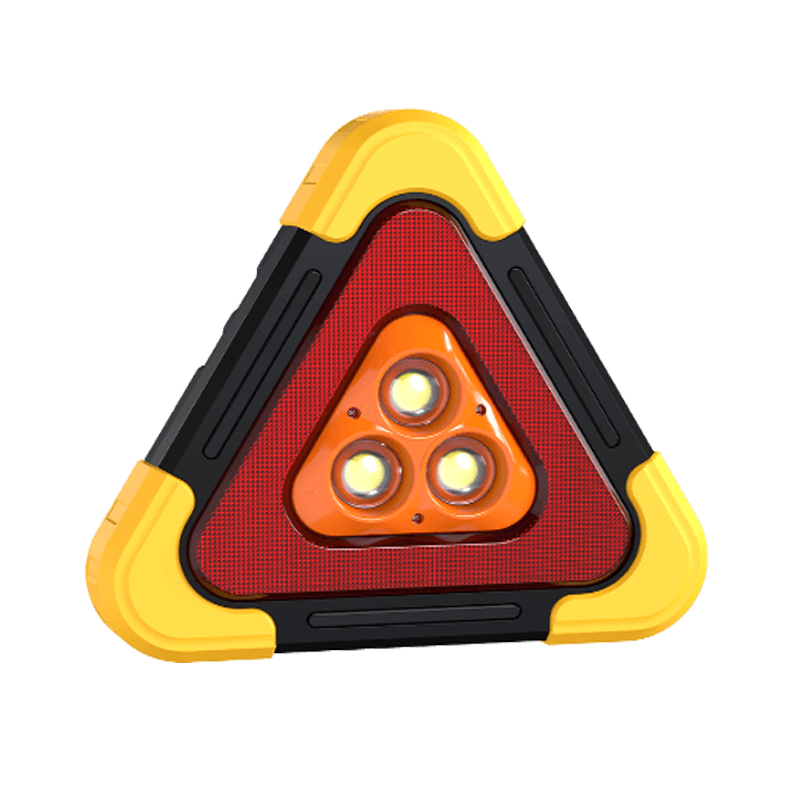
Two of those products earn their place in a blackout kit. The first is our solar LED triangular warning light, a rechargeable and reflective unit that folds flat, charges from sunlight or USB, and can be set on a driveway or beside an open hood to warn traffic or simply mark where you are.
 SJJ-D003 Multifunctional Solar LED Car Emergency TriangleA foldable rechargeable warning triangle with solar and USB charging, COB+LED visibility, SOS signal, and power bank for roadside or blackout use.View Product →
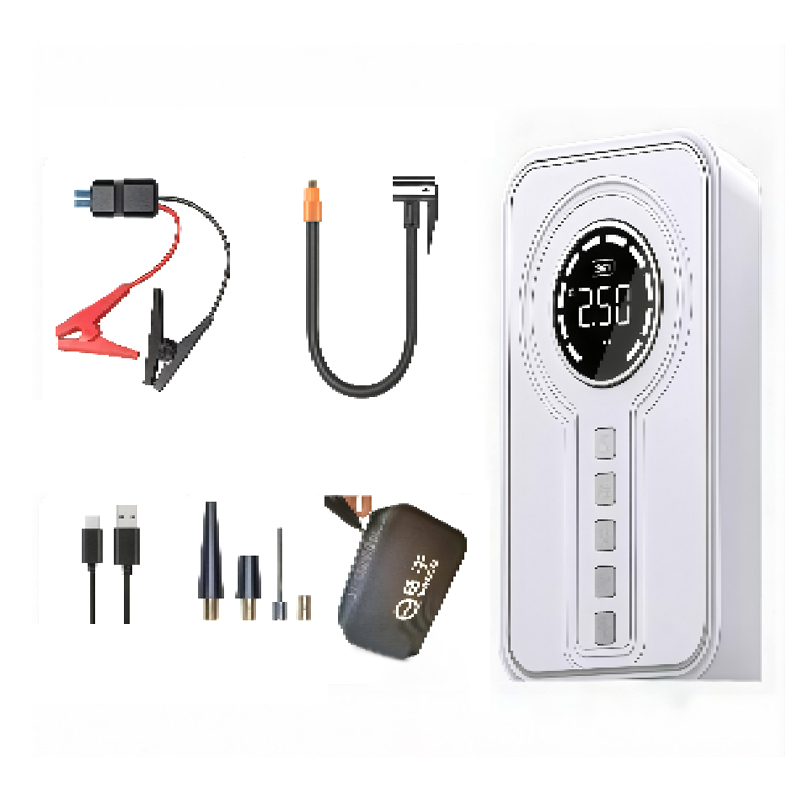
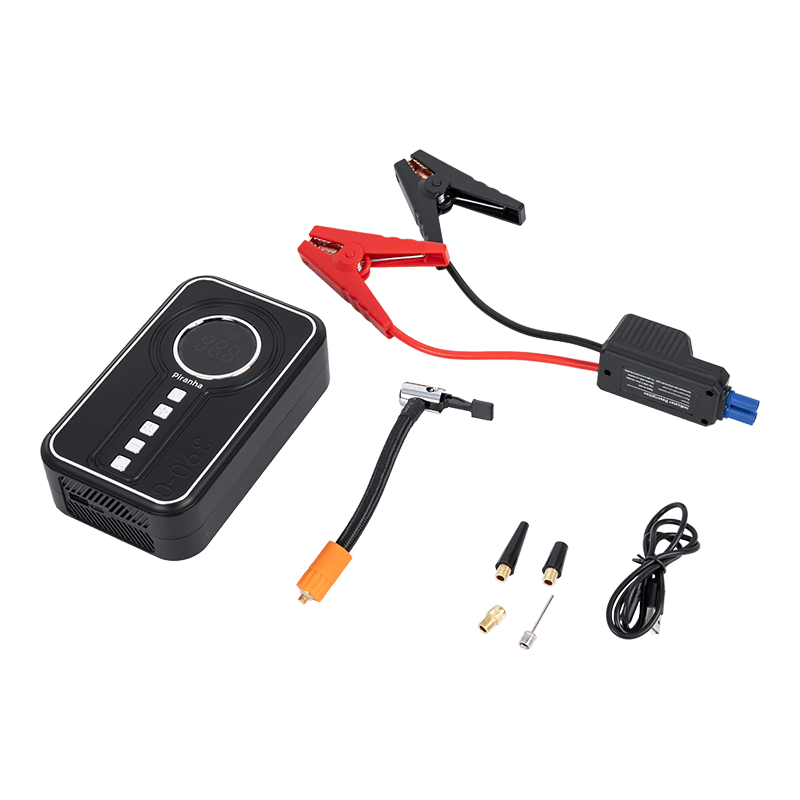
The second is the JL002, which combines an emergency jump starter with a tire inflator and a USB output. During an outage, that output turns a car accessory into a portable charging station for phones and small lights, which is often the difference between one evening of light and three.
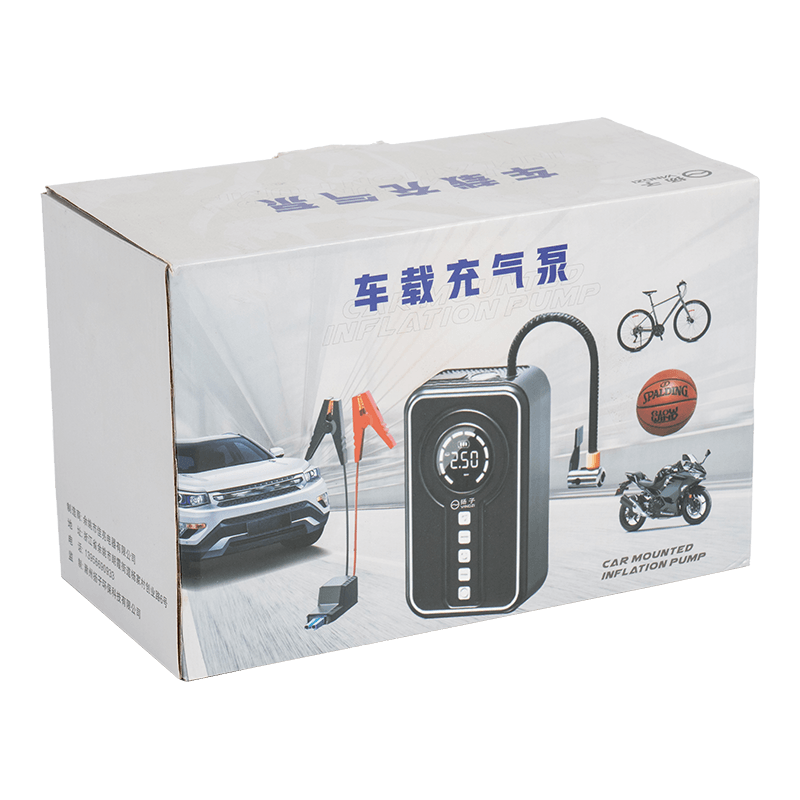 JL-002 Jump Starter and Tire Inflator with Digital GaugeA portable 2-in-1 lithium jump starter and 150PSI air pump with USB output, useful for dead batteries, tire inflation, and powering small devices during outages.View Product →
If you would like to see how these fit alongside the rest of the range, you can browse our triangle emergency warning lights and the wider catalog at any time.
Questions We Hear Most Often
How long will a rechargeable light actually last in a blackout?
Plan on six to twelve hours of usable light from a mid-sized unit if you stay on low or medium, and much less at full brightness. Two modest lights usually outlast one powerful one, because you can switch the second one off.
Does solar charging work indoors?
Only weakly. Panels placed behind glass typically recover a small fraction of their rated output, so treat solar as an outdoor, daytime top-up rather than your main charging method.
Can a rechargeable light stay plugged in permanently?
Some can, but constant full charge shortens battery life. It is better to charge to around 80 percent, unplug, and top up every few months, unless the maker explicitly supports permanent connection.
Blackouts are unpredictable, but the preparation is not complicated. One charged light per floor, a spare power bank, and a short charging routine twice a year cover the vast majority of situations a household actually faces. Everything beyond that is comfort rather than safety.
If you are sourcing rechargeable emergency products for a retail range, a fleet, or a distribution business, we are glad to talk through specifications, packaging, and customization. You can reach our team through the contact page, and we will answer with plain numbers rather than adjectives.

Recommended Products
Latest News

Contact Us
LET'S START COLLABORATING
Jialiang Electrical Appliance develops high-quality automotive and household products, including inflators, vacuum cleaners, bottle warmers, and small appliances. We aim to enhance daily life with innovative, user-focused solutions.
Product
Jump Starter and Air Compressor Solar LED Reflective Warning Triangle Light Wireless Mini Vacuum Cleaner Baby Milk Shaker Foam SprayerSTAY CONNECTED
 +86 13956690933
 [email protected]
 No. 67, Mojian Hill, Ditang Street, Yuyao City, Ningbo City, Zhejiang Province, China.
MOBILE
Copyright © Yuyao Jialiang Electrical Appliance Co., Ltd. All Rights
Reserved
 Custom Electric Household Appliances Manufacturers