


 русский
  Español
  عربى
عربى 
Wireless Handheld Vacuum Cleaner: How It Works & What to Know?
 2026.08.21
 Industry News
Content
How Wireless Handheld Vacuum Cleaners Work
A wireless handheld vacuum cleaner is a compact, battery powered cleaning device designed for quick pickups and small area cleaning without the restriction of a power cord. Built around a rechargeable battery, a small suction motor, and a lightweight dust container, this type of device is intended for spot cleaning tasks such as crumbs on a countertop, pet hair on upholstery, or dust inside a vehicle, rather than full-room floor cleaning. This article explores how wireless handheld vacuum cleaners work, the materials and components involved, filtration and maintenance considerations, and practical guidance for everyday use.
What Is a Wireless Handheld Vacuum Cleaner
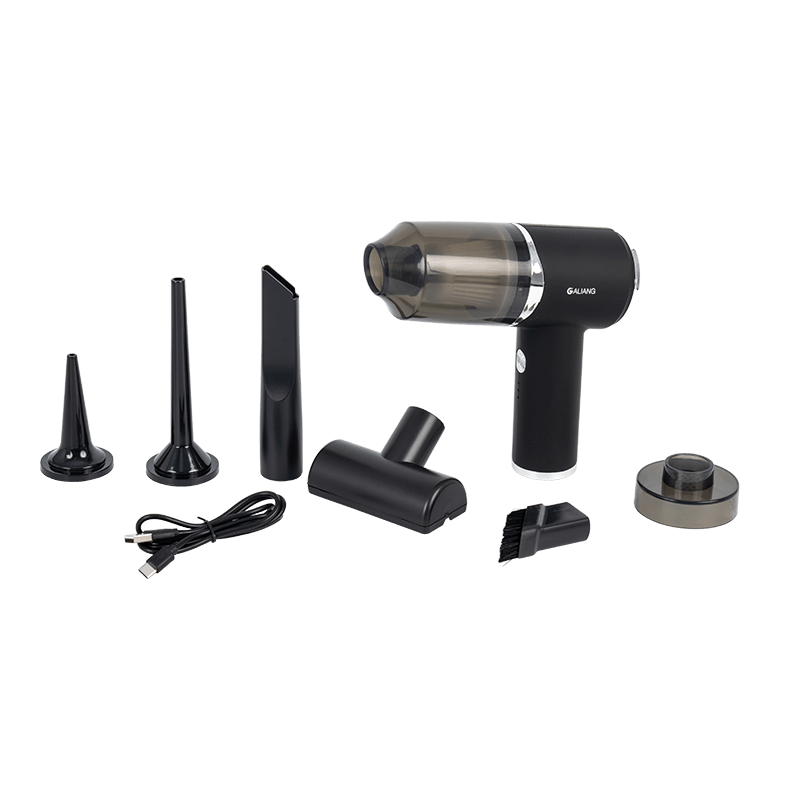
A wireless handheld vacuum cleaner is a small electric suction device that operates entirely on internal battery power, without a cord connecting it to a wall outlet during use. It typically consists of a motor and impeller assembly that generates airflow, a removable dust cup or bin that collects debris, an intake nozzle or brush head, and a lithium-ion battery pack housed in the handle. Because the entire unit is self-contained, it can be picked up and used immediately for short cleaning sessions in places where a full-size vacuum would be impractical, such as car interiors, stairs, or tight corners of a room.
Corded handheld vacuums depend on a continuous power connection and generally offer stronger, more consistent suction because they are not limited by battery capacity, but their range is restricted by cord length. Stick vacuums, by comparison, are larger, floor-oriented devices meant for covering entire rooms. A wireless handheld vacuum cleaner sits between these two categories in size and purpose, prioritizing portability and ease of storage over sustained runtime or wide-area coverage.
Core Suction and Battery Features
- Brushless motor design for quieter, longer-lasting operation
- Lithium-ion battery pack with multiple selectable power modes
- Cyclonic separation to reduce debris buildup on the filter
- Removable, washable dust cup for straightforward emptying
- Interchangeable nozzles for different surfaces and spaces
Core Components and Working Principle
The suction in a wireless handheld vacuum cleaner is generated by a small direct-current motor connected to an impeller, a fan-like component that spins at high speed to pull air, and any debris carried with it, into the intake nozzle. As air moves through the device, it passes through a filtration stage before exiting through vents near the motor housing, while solid debris is trapped in the dust cup by a combination of airflow separation and, in many models, a cyclonic chamber that spins particles away from the airstream before they reach the filter.
Two motor types are common in this category: brushed direct-current motors, which are simpler and lower in cost but wear down faster due to internal friction from carbon brushes, and brushless direct-current motors, which use electronic commutation instead of physical brushes, resulting in less mechanical wear and generally quieter operation. Brushless motors also tend to maintain more stable suction as the battery discharges, since their control electronics can adjust power delivery more precisely than a brushed motor circuit.
Battery Technology and Runtime
Many wireless handheld vacuum cleaners use lithium-ion battery cells, valued for their relatively high energy density and ability to hold charge over repeated use cycles compared to older nickel-based battery chemistries. Battery capacity is usually measured in milliampere-hours (mAh) or watt-hours (Wh), and runtime varies depending on the suction mode selected, with many devices offering a standard mode for general cleaning and a boost or turbo mode that increases motor speed at the cost of shorter battery life. A typical small handheld unit might run for ten to twenty minutes on standard mode and considerably less on boost mode, which is generally sufficient for spot cleaning tasks but not extended cleaning sessions.
Charging methods vary by design, with some models using a dedicated charging dock that the vacuum sits in when not in use, and others using a direct USB-C or barrel connector port built into the unit itself. Battery management circuitry within the device typically monitors cell temperature and voltage during charging to reduce the risk of overcharging, which helps preserve battery lifespan across repeated charge cycles over the product's service life.
Filtration Systems and Dust Handling
Filtration in a wireless handheld vacuum cleaner usually involves multiple stages working together to capture debris of different sizes before exhaust air is released back into the room. A primary filter or cyclonic separator handles larger particles such as crumbs, hair, and dust clumps, while a secondary filter, often a foam or sponge layer, captures finer dust before air reaches a final stage. Some models include a high-efficiency particulate air (HEPA) filter as this final stage, which is designed to trap very small particles including pollen and fine dust, making it a relevant feature for households concerned about allergens.
Because filters can become clogged with fine dust over time, regular cleaning is necessary to maintain consistent suction performance. Washable filters, common in mid-range models, can typically be rinsed under running water and left to air dry fully before being reinstalled, while some manufacturers recommend replacing foam or HEPA filters after a set number of months depending on usage frequency. Emptying the dust cup after each use, rather than waiting until it is completely full, also helps maintain airflow and reduces strain on the motor.
Key Filtration and Maintenance Benefits
- Multi-stage filtration to capture both large debris and fine dust
- Optional HEPA filter stage for allergen-sensitive households
- Washable filter components to reduce ongoing replacement costs
- Regular dust cup emptying to preserve consistent airflow
Materials and Build Considerations
The outer housing of a wireless handheld vacuum cleaner is typically molded from ABS (acrylonitrile butadiene styrene) plastic, chosen for its combination of impact resistance and light weight, which keeps the overall unit comfortable to hold during extended use. Internal components exposed to airflow, such as the cyclonic chamber or dust cup, are sometimes made from polypropylene, a material that resists static buildup better than some alternatives, which can reduce dust clinging to interior surfaces. Attachment nozzles and crevice tools are often made from a combination of rigid plastic and softer rubber or bristle inserts, allowing the same base unit to adapt to different surfaces such as upholstery, keyboards, or car seat gaps.
Common Applications and Use Cases
Wireless handheld vacuum cleaners are used across a range of everyday scenarios where portability matters more than sustained cleaning power. The table below summarizes several common use cases along with the attachments typically used for each.
| Use Case | Typical Attachment | Notes |
|---|---|---|
| Car interior cleaning | Crevice nozzle | Reaches seat gaps and floor mats |
| Upholstery and pet hair | Motorized brush head | Agitates embedded hair and fibers |
| Kitchen counters and crumbs | Wide flat nozzle | Covers broad flat surfaces quickly |
| Keyboard and electronics | Narrow crevice tool | Accesses small gaps between keys |
| Stairs and tight corners | Standard nozzle | Lightweight design eases handling on steps |
Maintenance and Care Guidelines
Routine maintenance helps a wireless handheld vacuum cleaner maintain consistent suction and extends the working life of its components. Emptying the dust cup after each use prevents debris from compacting and blocking airflow, while periodically checking the intake nozzle and brush head for tangled hair or fibers helps avoid strain on the motor. Storing the device on its charging dock, if included, rather than leaving it uncharged for long periods, can help maintain battery health, since lithium-ion cells generally perform well when not left fully depleted for extended stretches.
Practical Considerations for Buyers
When evaluating a wireless handheld vacuum cleaner, runtime and charging method are often central considerations, particularly for households that plan to use the device frequently throughout the week rather than occasionally. Weight and grip design also matter for comfort during use, especially for tasks that involve holding the device at an angle, such as cleaning a car ceiling or stairs. Buyers focused on allergen control may prioritize models with a HEPA filtration stage, while those primarily concerned with pet hair often look for a motorized brush attachment designed to lift embedded fibers from fabric surfaces.
Noise level is another practical factor, since brushless motor designs tend to run quieter than brushed alternatives at comparable suction strength, which can be relevant for households with young children or pets sensitive to sound. As battery technology and motor efficiency continue to improve, wireless handheld vacuum cleaners are increasingly used not only as a supplementary tool alongside a full-size vacuum, but as a primary cleaning device for smaller living spaces, vehicles, and offices where portability and quick access are valued over extended runtime.

Recommended Products
Latest News

Contact Us
LET'S START COLLABORATING
Jialiang Electrical Appliance develops high-quality automotive and household products, including inflators, vacuum cleaners, bottle warmers, and small appliances. We aim to enhance daily life with innovative, user-focused solutions.
Product
Jump Starter and Air Compressor Solar LED Reflective Warning Triangle Light Wireless Mini Vacuum Cleaner Baby Milk Shaker Foam SprayerSTAY CONNECTED
 +86 13956690933
 [email protected]
[email protected]
 No. 67, Mojian Hill, Ditang Street, Yuyao City, Ningbo City, Zhejiang Province, China.
MOBILE
Copyright © Yuyao Jialiang Electrical Appliance Co., Ltd. All Rights
Reserved
 Custom Electric Household Appliances Manufacturers