


 русский
  Español
  عربى
عربى 
Does a Foam Sprayer Protect Car Paint Better Than Washing?
 2026.08.14
 Industry News
Content
- 1 How Foam Washing Reduces Paint Contact and Swirl Marks
- 2 Comparing Foam Pre-Wash and Direct Contact Washing
- 3 Foam Generation Mechanics in Handheld Sprayers
- 4 Materials and Build Considerations
- 5 Common Applications Beyond Car Washing
- 6 Practical Techniques for Reducing Paint Contact During Washing
- 7 Choosing Between Manual and Powered Foam Sprayers
How Foam Sprayers Better Protect Your Paint
A foam sprayer generally offers better paint protection than traditional bucket-and-sponge washing because it reduces direct contact between abrasive dirt particles and the vehicle surface during the initial cleaning stage. When thick foam is applied before any physical wiping begins, loose grit, road grime, and dust are suspended and loosened by the cleaning solution rather than being dragged across the paint by a sponge or wash mitt, which is the primary mechanism responsible for fine scratches known as swirl marks. Traditional washing methods that skip a foam pre-wash step rely on immediate contact cleaning, increasing the likelihood that trapped particles act like sandpaper against the clear coat as pressure is applied.
How Foam Washing Reduces Paint Contact and Swirl Marks
Swirl marks form when tiny abrasive particles become trapped between a wash mitt and the paint surface, then get dragged across the clear coat under pressure. Under magnification, these marks appear as a web of fine, random scratches that catch and scatter light, which is why they become especially visible under direct sunlight or parking lot lighting. A foam pre-wash interrupts this process by coating the vehicle in a cushioning layer of soap and air bubbles that helps lift contaminants away from the surface before any mechanical wiping occurs, meaning that by the time a wash mitt makes contact, a portion of the loose grime has already been softened or rinsed away rather than ground into the finish.
Detailing professionals commonly reference the two-bucket method alongside foam pre-washing as a combined approach to minimizing surface damage, since neither technique alone fully eliminates contact-related scratching. The foam stage handles the bulk of loose surface debris, while a rinse bucket used during hand washing helps remove grit from the mitt itself between passes, further reducing the concentration of abrasive particles reintroduced to the paint during manual contact.
Comparing Foam Pre-Wash and Direct Contact Washing
The practical difference between foam-assisted washing and direct contact washing becomes clearer when comparing how each method handles loose contaminants before physical contact occurs. The table below outlines several relevant factors side by side.
| Factor | Foam Pre-Wash | Direct Contact Washing |
|---|---|---|
| Initial contact with grit | Delayed until after loosening | Immediate, at initial wipe |
| Surface coverage | Even, cushioned layer | Uneven, dependent on wiping pattern |
| Typical time investment | Adds several minutes of dwell time | Shorter, single-stage process |
| Risk of swirl marks | Reduced when combined with rinsing | Higher without a rinse bucket step |
Foam Generation Mechanics in Handheld Sprayers
Handheld foam sprayers rely on a mesh or screen component positioned at the nozzle outlet, where pressurized liquid passes through fine openings and mixes with air to form dense bubbles rather than a plain liquid stream. The thickness of the resulting foam depends on several variables, including the concentration of the diluted cleaning solution, the pressure behind the spray, and the density of the mesh screen itself. A finer mesh generally produces smaller, more tightly packed bubbles that cling to vertical panels longer, extending the dwell time during which loosened dirt can be rinsed away rather than reabsorbed onto the paint as the foam slides down and dries.
Pressure Sources: Manual Pump Versus Powered Units
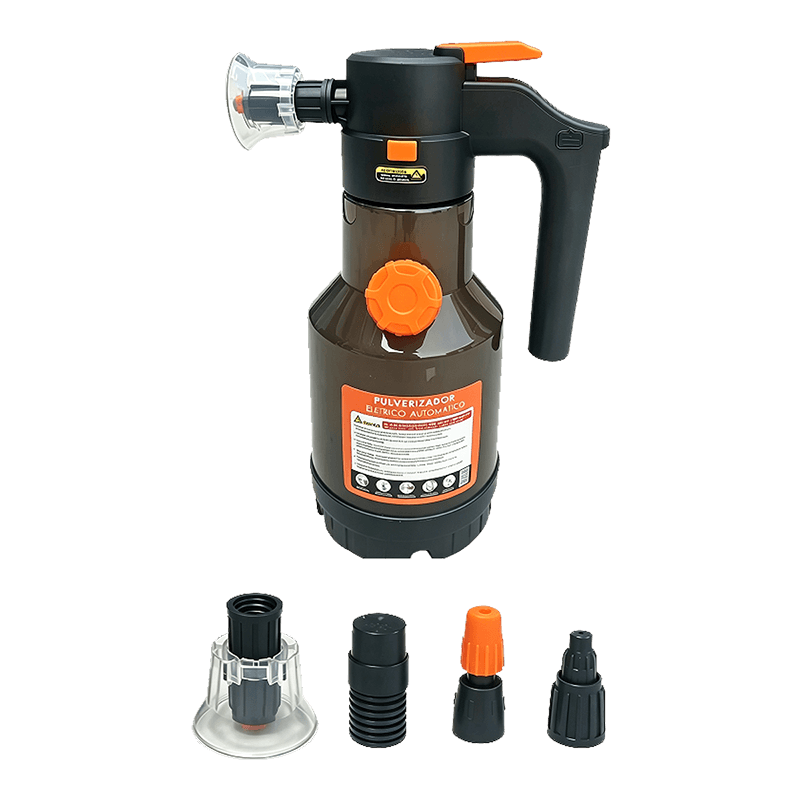
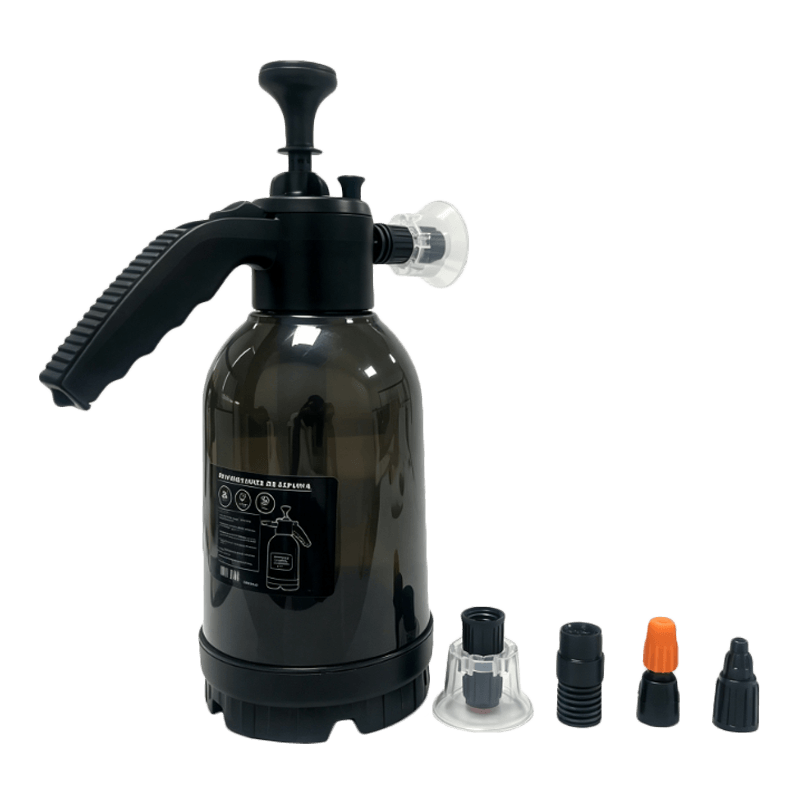
Two general categories of foam sprayers are used for vehicle cleaning: manually pressurized units and battery powered units. Manual pump sprayers build pressure through repeated hand pumping before use, storing that pressure in a sealed tank until the trigger is released, which offers a straightforward, cordless design without reliance on a rechargeable cell. Powered units instead use a small electric pump connected to a lithium battery, allowing continuous foam output without repeated manual pumping, which can be useful for longer sessions covering an entire vehicle or multiple cleaning tasks without interruption.
Key Factors Behind Foam Sprayer Paint Safety
- Foam layer delays contact between grit and the clear coat
- Mesh screen density controls bubble size and cling time
- Rinsing before contact washing removes loosened debris
- Sectional application prevents premature drying on the surface
Materials and Build Considerations
The housing and tank of a foam sprayer are typically constructed from polypropylene (PP) or high-density polyethylene (HDPE), both chemical-resistant plastics chosen for their ability to tolerate diluted detergents and car shampoos without degrading over repeated use. HDPE tends to offer somewhat greater rigidity and impact resistance, which is relevant for units that may be set down on hard surfaces or transported in a vehicle trunk alongside other cleaning tools, while PP is valued for its lighter weight and compatibility with a broader range of cleaning solution formulations. Seals and gaskets around the pump mechanism are generally made from rubber or silicone compounds designed to maintain pressure without leaking during repeated pump cycles.
Nozzle assemblies on many models include an adjustable collar that allows the user to shift between a concentrated foam stream and a wider fan pattern, which affects how evenly the foam spreads across a hood, door panel, or fender. A 2-liter tank capacity is common among mid-sized handheld units, generally supporting around twenty individual cleaning cycles on a single fill depending on how liberally the foam is applied, which reduces how often the tank needs to be refilled during a full vehicle wash.
Common Applications Beyond Car Washing
While vehicle detailing is a frequently discussed use case, foam sprayers are also applied across a range of household and outdoor tasks where an even, clinging layer of cleaning solution is helpful. In household cleaning, foam application allows detergent to remain on tiled surfaces, outdoor furniture, or grimy equipment long enough to loosen buildup before rinsing, rather than running off immediately as a thin liquid spray would. In gardening contexts, similar hand-pump sprayer designs are sometimes repurposed for applying diluted fertilizers or pest control solutions evenly across plant foliage, since the fan-pattern nozzle setting distributes liquid across a wider area than a narrow jet stream.
Motorcycle and bicycle cleaning represent another common use case, where the compact size of handheld units makes it easier to reach narrow frame sections and wheel spokes that would be difficult to cover evenly with a standard garden hose nozzle. Outdoor patio furniture, grills, and trash bins are also commonly cleaned using foam application, since the extended dwell time helps loosen grease and grime that would otherwise require scrubbing with additional water and detergent.
Practical Techniques for Reducing Paint Contact During Washing
Applying foam evenly from the roof downward allows gravity to help the foam travel across lower panels, extending coverage time on areas that accumulate the heaviest road grime, such as rocker panels and lower door sections. Allowing the foam to sit for a short period, generally a few minutes depending on ambient temperature and how quickly the foam begins to dry, gives the cleaning solution time to break down bonded contaminants before any wiping begins. Rinsing the foam away with a separate hose or pressure washer before introducing a wash mitt further reduces the volume of loose particles present during the contact-washing stage, which is the point in the process closely associated with fine scratching.
Working in sections rather than covering the entire vehicle with foam at once helps prevent the solution from drying on the surface before it can be rinsed, since dried foam residue can leave mineral deposits or streaking if left too long, particularly in warm or sunny conditions. Rinsing tools such as sprayer nozzles or wash mitts between sections also helps limit the transfer of grit collected from one panel to the next.
Choosing Between Manual and Powered Foam Sprayers
Selecting between a manual pump sprayer and a battery powered unit generally comes down to how frequently the device will be used and how much continuous output is needed per session. Manual units require repeated pumping to maintain pressure throughout use, which can involve more physical effort during longer sessions but avoids any dependency on battery charge level. Powered units maintain more consistent foam output across an entire session without manual pumping, which can be convenient for larger vehicles or multi-vehicle households, though they require periodic recharging and depend on battery condition over time.
Tank capacity is another practical consideration, since smaller tanks require more frequent refilling during a full exterior wash, while larger tanks add weight that can make the sprayer less comfortable to hold during extended use. Adjustable nozzle settings are broadly useful across both manual and powered categories, allowing the same unit to switch between a concentrated foam application for heavily soiled panels and a lighter mist for general rinsing or plant watering tasks outside of vehicle cleaning contexts.

Recommended Products
Latest News
Contact Us
LET'S START COLLABORATING
Jialiang Electrical Appliance develops high-quality automotive and household products, including inflators, vacuum cleaners, bottle warmers, and small appliances. We aim to enhance daily life with innovative, user-focused solutions.
Product
Jump Starter and Air Compressor Solar LED Reflective Warning Triangle Light Wireless Mini Vacuum Cleaner Baby Milk Shaker Foam SprayerSTAY CONNECTED
 +86 13956690933
 [email protected]
[email protected]
 No. 67, Mojian Hill, Ditang Street, Yuyao City, Ningbo City, Zhejiang Province, China.
MOBILE
Copyright © Yuyao Jialiang Electrical Appliance Co., Ltd. All Rights
Reserved
 Custom Electric Household Appliances Manufacturers