


 русский
  Español
  عربى
عربى 
What Does the Triangle Warning Light on Your Dashboard Really Mean?
 2026.09.09
 Industry News
Content
- 1 What a Triangle Dash Light Means
- 2 Why the Exclamation Inside a Triangle Is Used as a Symbol
- 3 Common Reasons a Triangle Warning Light in Car Systems Appears
- 4 What to Do When the Triangle Sign in Car Displays Turns On
- 5 Dashboard Triangle Versus the Physical Roadside Warning Triangle
- 6 Materials and Construction of Warning Triangle Devices
- 7 Everyday Situations Where a Warning Triangle Gets Used
- 8 Keeping Warning Systems Ready and Reliable
What a Triangle Dash Light Means
A triangle dash light with an exclamation point inside it is a general-purpose alert built into nearly every modern vehicle's instrument cluster. When this symbol appears, it is not tied to one single part; instead it functions as a catch-all signal telling the driver that at least one monitored system needs attention. The exact meaning depends on the make and model, so the owner's manual remains a reliable reference for what that particular triangle car light is reporting on a given dashboard.
In many vehicles, this triangle light on dashboard displays is paired with a short text message on the driver information screen, such as "check system" or a specific component name. That message often accompanied by an exclamation point in a triangle is the vehicle's way of narrowing down which subsystem triggered the alert, since the triangle shape alone is intentionally generic.
Why the Exclamation Inside a Triangle Is Used as a Symbol
The exclamation point inside a triangle is a recognized caution symbol used across transportation, industrial equipment, and consumer electronics, not only inside cars. The triangular outline draws the eye quickly, while the exclamation point inside a triangle communicates urgency without needing text, which makes it useful across regions and languages. Automakers adopted this same shape for the car in triangle symbol family of alerts because drivers already associate it with caution from road signage.
How It Differs From Other Dashboard Icons
Unlike a triangle check engine light or a battery icon, which point to a fixed component, the plain yellow triangle with exclamation point car owners see is intentionally broad. It can relate to tire pressure, traction control, brake fluid, coolant temperature, or an electronic stability system, depending on the vehicle's programming.
Common Reasons a Triangle Warning Light in Car Systems Appears
Because the dash light triangle with exclamation point is shared across several systems, the underlying cause varies by brand. The table below outlines some frequent scenarios drivers report when this symbol activates.
| Possible Trigger | Typical Cause | Urgency Level |
|---|---|---|
| Tire pressure monitor | Underinflated or overinflated tire | Moderate |
| Brake system alert | Low brake fluid or worn pads | High |
| Stability or traction control | Sensor fault or slippery road detection | Moderate |
| Powertrain or electrical fault | Wiring, module, or software glitch | Varies |
Some drivers searching for what does a triangle with an exclamation point mean are dealing with something as routine as a tire pressure dip after a temperature drop, while for others the triangle sign on dashboard is flagging a brake or steering-related concern that calls for closer inspection.
What to Do When the Triangle Sign in Car Displays Turns On
When the symbol triangle with exclamation point lights up, checking the driver display for an accompanying text message is a practical way to identify the affected system. If no message appears, reviewing the vehicle's manual for that specific icon layout is recommended, since icon meanings are not standardized across every manufacturer.
- Pull over safely if the vehicle also shows reduced power, unusual noises, or handling changes
- Check tire pressure at each wheel using a gauge if the light coincides with a pressure-related message
- Inspect fluid levels including brake and coolant reservoirs when accessible
- Have a diagnostic scan performed if the triangle car light stays on after a restart
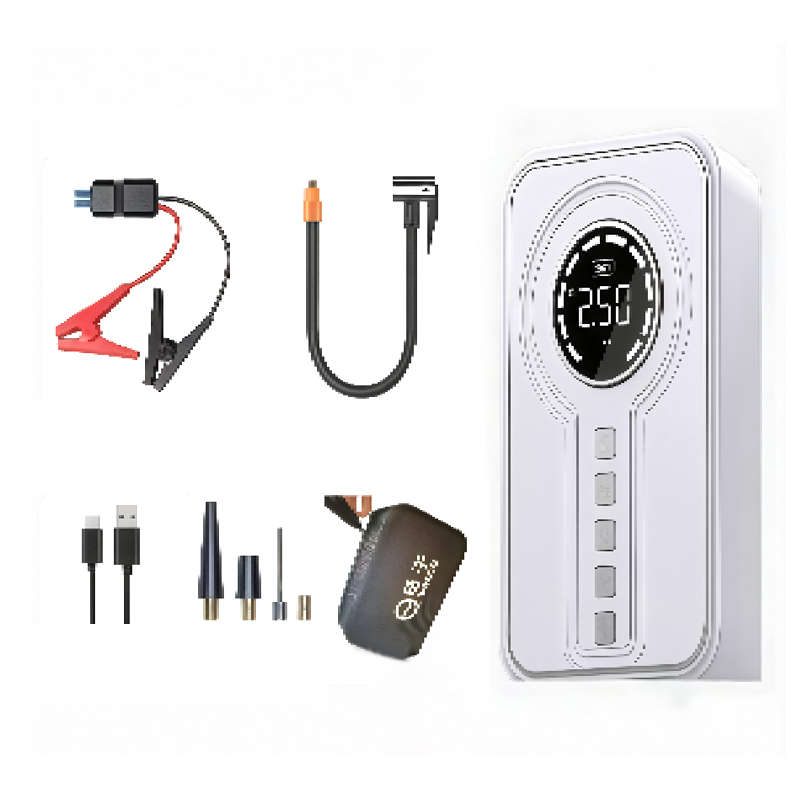
A triangle light in car dashboards that flashes rather than stays steady often signals a more time-sensitive concern, and continuing to drive without checking the cause can allow a smaller issue to become a larger repair. Since a low tire is one of the more frequent triggers behind this alert, keeping a compact inflator in the vehicle, such as those produced by automotive supplies manufacturers like Yuyao Jialiang Electric Appliance, can make it easier to restore proper pressure before continuing the drive.
Dashboard Triangle Versus the Physical Roadside Warning Triangle
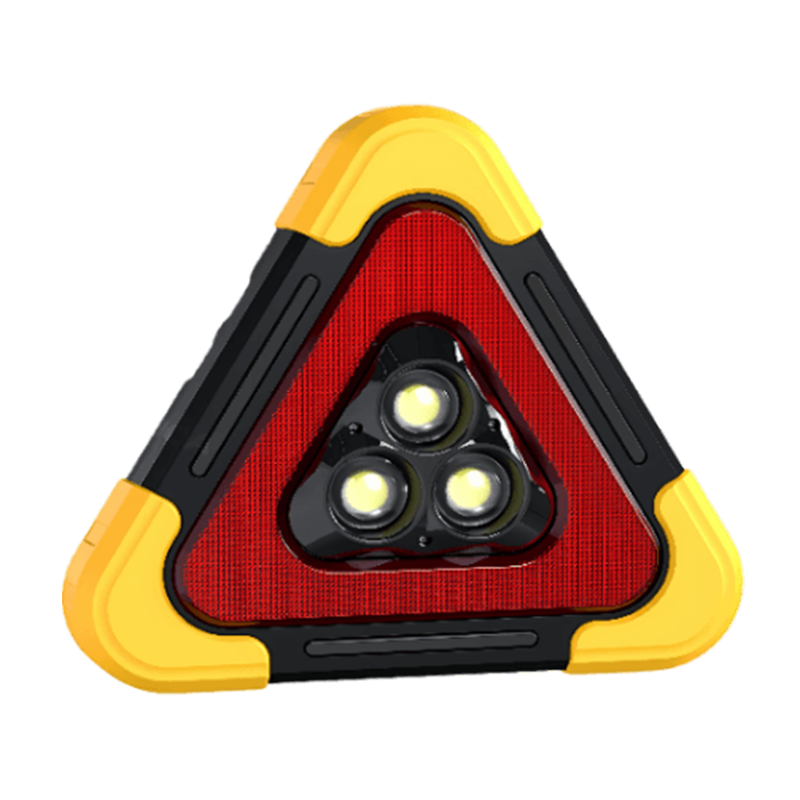
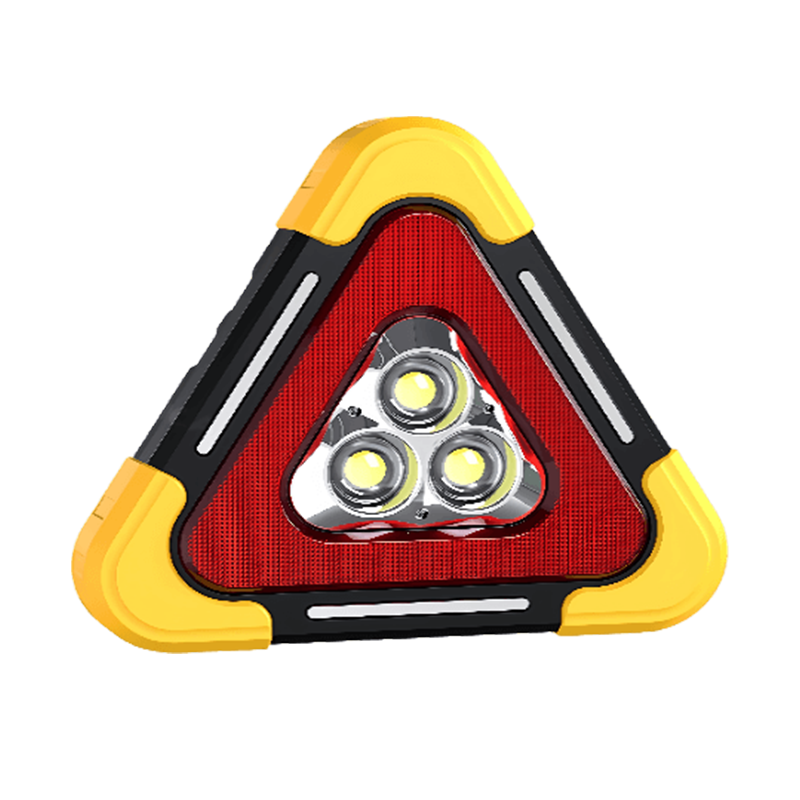
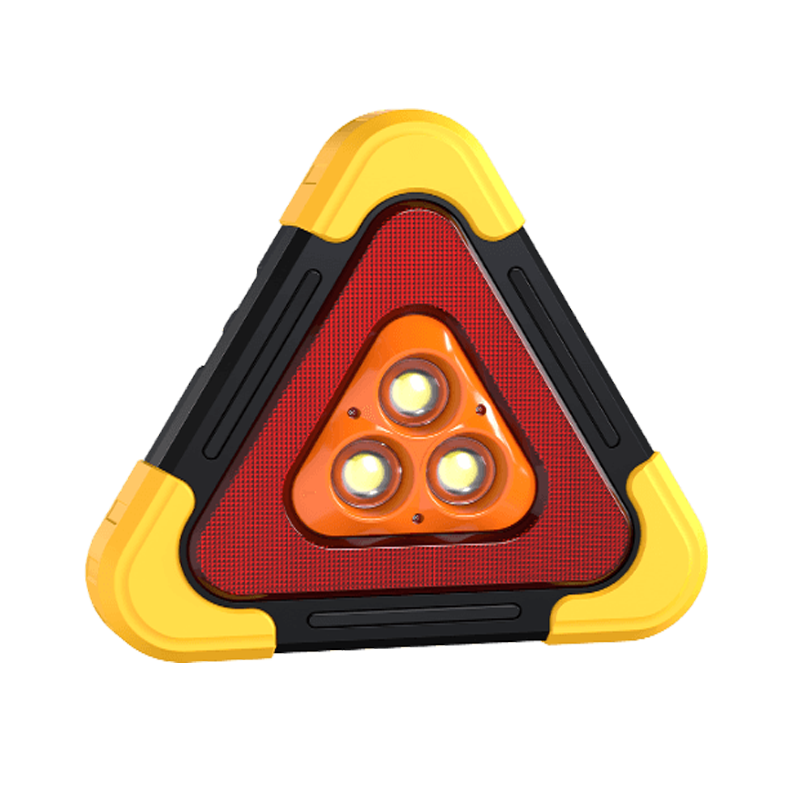
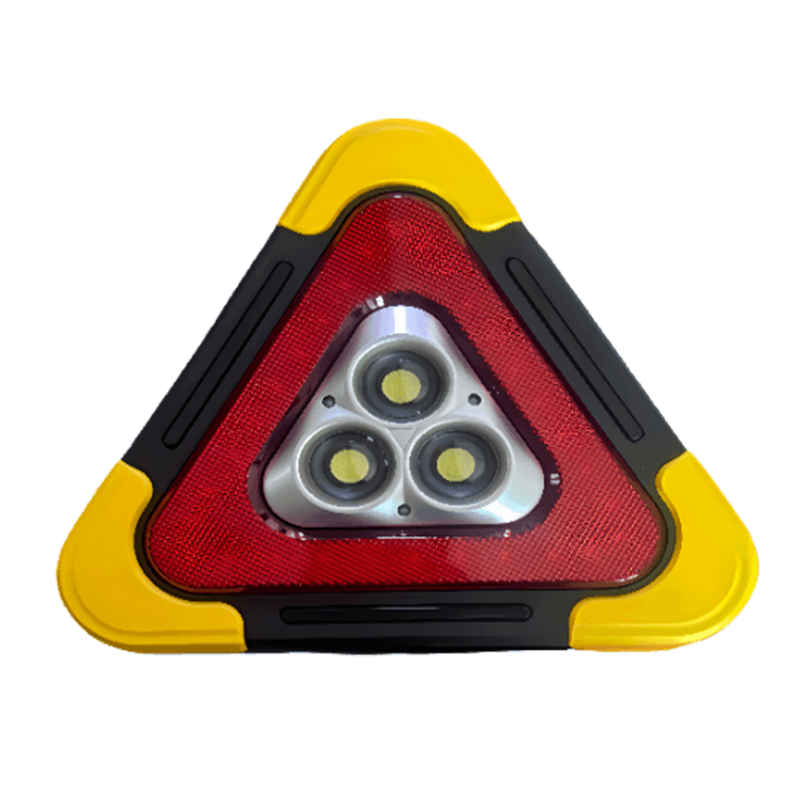
It helps to separate the dashboard triangle symbol from a physical triangle dash light device carried in the trunk for roadside emergencies. The physical version is a standalone warning triangle in car emergency kits, designed to be placed on the road behind a stopped vehicle so approaching traffic notices it well in advance. Many current versions combine the familiar triangular shape with high-brightness LED sources instead of relying only on reflective surfaces, which keeps the device visible at night, in rain, or in foggy conditions where reflective-only triangles are harder to spot.
Why the LED Version Has Grown Common
A lit triangle can be identified from a greater distance than a plain reflective panel, giving oncoming drivers more time to react and reducing the chance of a secondary collision near a stopped vehicle. This is particularly relevant on highways or unlit roads, where reaction distance matters more than on a slow city street. Some units combine COB light sources with individual LED bulbs in the same panel, pairing a broad, even glow with a set of sharper flashing points, which helps the triangle stand out whether it is viewed head-on or from an angle.
Materials and Construction of Warning Triangle Devices
A typical roadside warning triangle uses a folding frame made from impact-resistant plastic or a light metal alloy, allowing it to be collapsed flat for storage and expanded quickly during an emergency stop. The base is usually weighted or widened to keep the triangle standing upright on uneven pavement or in light wind, since a tipped-over unit loses much of its warning value. The outer casing on LED-equipped models is generally sealed against dust and moisture, letting the device withstand exposure on wet roads or during a rainstorm without affecting the internal light source. Manufacturers with a background in broader automotive supplies and small household appliances, such as Yuyao Jialiang Electric Appliance, often apply similar engineering standards across product lines, from inflators to LED-based warning devices, so the components are expected to hold up under repeated use in a vehicle.
Power sources for these devices have expanded beyond simple dry-cell batteries. A number of current models include a small solar panel built into the triangle's face, letting the internal battery top up gradually whenever the unit sits in sunlight, whether stored on a dashboard shelf or left near a window at home. This reduces how often the battery needs to be swapped or plugged in, which matters for a device that may sit unused in a vehicle for weeks between emergencies. Some panels also include a USB charging port as a secondary option, giving owners a way to recharge quickly before a trip if solar exposure has been limited.
Because the light output is designed for wide-angle visibility, the panel often uses multiple small LEDs arranged around the triangle's edge rather than a single bulb, spreading illumination evenly across the shape. Several models add a cluster of high-intensity red flashing LEDs, sometimes numbering in the dozens, to increase the flashing effect visible from a distance at night. Beyond the warning function, a number of these triangles fold open into a work light or handheld torch, adding a secondary use for changing a tire or checking under the hood in low light.
Everyday Situations Where a Warning Triangle Gets Used
Placing a warning triangle behind a vehicle is common after a flat tire, an overheating engine, a mechanical breakdown, or a minor collision where the car cannot be moved off the roadway immediately. Roadside assistance guidance in many regions recommends setting the triangle a set distance behind the vehicle, often measured in dozens of meters, so approaching traffic has enough space to slow down safely. On multi-lane highways, some drivers place a second triangle further back to give an even earlier signal, particularly around curves or hills where sightlines are shorter.
Delivery fleets, roadside repair services, and everyday commuters all rely on the same basic device, though the LED-enhanced versions have become more common because they remain visible even when a vehicle's own hazard lights are difficult to see from a distance. A folding model that also works as a torch or work light tends to see more regular use beyond just breakdowns, since it can double as a general-purpose light source for camping, home repairs, or power outages.
Keeping Warning Systems Ready and Reliable
For the dashboard side, routine maintenance such as checking tire pressure monthly, servicing brakes on schedule, and addressing a triangle warning light promptly rather than ignoring it helps keep the alert system meaningful rather than a constant background nuisance. For the physical warning triangle carried in the vehicle, periodically checking the battery charge and confirming the folding joints still lock securely ensures the device performs when an actual roadside stop happens. On solar-assisted models, giving the panel occasional direct sunlight and testing the flashing mode every so often helps confirm the battery is holding a charge. Both the electronic exclamation point in car dashboards and the physical warning triangle share the same underlying purpose: giving drivers, passengers, and nearby traffic enough notice to respond before a small issue turns into a larger safety concern.

Recommended Products
Latest News

Contact Us
LET'S START COLLABORATING
Jialiang Electrical Appliance develops high-quality automotive and household products, including inflators, vacuum cleaners, bottle warmers, and small appliances. We aim to enhance daily life with innovative, user-focused solutions.
Product
Jump Starter and Air Compressor Solar LED Reflective Warning Triangle Light Wireless Mini Vacuum Cleaner Baby Milk Shaker Foam SprayerSTAY CONNECTED
 +86 13956690933
 [email protected]
[email protected]
 No. 67, Mojian Hill, Ditang Street, Yuyao City, Ningbo City, Zhejiang Province, China.
MOBILE
Copyright © Yuyao Jialiang Electrical Appliance Co., Ltd. All Rights
Reserved
 Custom Electric Household Appliances Manufacturers