


 русский
  Español
  عربى
عربى 
Why Battery-Powered Foam Sprayers Are Key to Waterless Cleaning?
 2026.08.07
 Industry News
Content
- 1 Battery-Powered Foam Sprayers Cut Water Use by Replacing Rinse Volume With Clinging Foam
- 2 Why Traditional Hose Washing Wastes So Much Water
- 3 How the Foam-Generating Mechanism Works
- 4 The Role of Lithium Power in Portable Foam Cleaning
- 5 Material Choices and Chemical Compatibility
- 6 Common Applications Beyond Vehicle Washing
- 7 Reference Specifications for a 2L Rechargeable Foam Sprayer
- 8 Maintenance Habits That Preserve Foam Quality Over Time
- 9 What This Means for Water-Conscious Cleaning Habits
Battery-Powered Foam Sprayers Cut Water Use by Replacing Rinse Volume With Clinging Foam
A battery-powered foam sprayer becomes essential for waterless or low-water cleaning because it replaces the large volume of running water a hose or bucket wash requires with a thick layer of foam that clings to a surface long enough for dirt and grime to loosen on their own. Instead of flooding a car body or an outdoor surface with continuous flowing water, the device mixes a small amount of water with detergent and air, pushing the mixture through a foam-generating screen that turns it into a dense, slow-draining layer. A single tank holding around 2 liters of solution can complete roughly 20 cleaning cycles on a passenger vehicle, compared to a garden hose that can consume well over 100 liters for a single wash. This shift in how cleaning solution is delivered is the core reason foam-based tools have become a practical answer to water restrictions and sustainability goals in both household and professional detailing settings.
Why Traditional Hose Washing Wastes So Much Water
A standard garden hose without a shutoff nozzle can release several liters of water every minute it runs, and most of that volume does nothing more than rinse away water that was just applied moments earlier. Because the water has no cleaning agent suspended in it for most of the wash cycle, the process relies on mechanical scrubbing and repeated rinsing rather than chemical loosening of dirt. This means a typical vehicle wash performed with a hose often takes fifteen to twenty minutes of continuous flow, much of which is spent rinsing rather than actually lifting contamination from the paint or surface.
Foam-based cleaning inverts this ratio. Because the foam stays in contact with the surface for an extended period, often two to five minutes depending on ambient temperature and surface angle, the detergent has time to break down road film, dust, and organic residue before any wiping or rinsing occurs. The result is that far less water needs to touch the surface overall, since the foam itself is doing the chemical work that a continuous water stream would otherwise need to accomplish through volume and repetition.
How the Foam-Generating Mechanism Works
Mixing Ratio and Screen Density
Inside the sprayer, diluted detergent solution is drawn from the tank and forced through a fine mesh or layered foam screen at the nozzle tip, where it combines with pressurized air to form bubbles of a consistent, small size. The tighter the mesh density, the thicker and more stable the resulting foam, which directly affects how long it clings to a vertical panel before sliding off. A screen that produces coarse, unstable foam drains within seconds and behaves closer to soapy water, defeating the purpose of foam cleaning altogether.
Adjustable Nozzle Control
A variable pressure nozzle lets the user shift between a wider misting pattern for large flat panels such as a car hood, and a narrower, more concentrated stream for grime buildup around wheel wells or door sills. This adjustability matters because different surfaces and different levels of soiling call for different foam density and delivery speed, and a fixed-output nozzle would force compromise on one type of surface or another.
Core Foam Delivery Features
Layered mesh screen for consistent, small bubble size
Adjustable nozzle for wide misting or concentrated stream
Extended foam contact time on vertical surfaces
Reduced water volume compared to continuous hose flow
Compatible with a range of detergent concentrations
The Role of Lithium Power in Portable Foam Cleaning
Removing the need for a wall outlet or a connection to a pressurized water line is what makes battery-powered foam sprayers practical outside of a driveway with utility access. A lithium battery cell provides the pump pressure needed to atomize the solution and push it through the foam screen consistently, without the voltage drop or inconsistent pressure that can occur with corded electric alternatives running through long extension cords. Extended runtime on a single charge allows a user to complete multiple vehicles or a full round of outdoor furniture and equipment cleaning without pausing to recharge, which matters in settings such as fleet maintenance yards, campsites, or rural properties without convenient outlet access nearby.
Because the pump and battery are self-contained within the tank housing, the entire unit can be carried to the cleaning site rather than requiring the vehicle or object to be moved to a fixed washing station. This portability extends foam-based waterless cleaning to boats, motorcycles, patio furniture, and agricultural equipment, where a fixed hose bib or dedicated wash bay is not always available.
Material Choices and Chemical Compatibility
The tank and internal components of a foam sprayer are commonly molded from polypropylene, a material chosen for its resistance to a wide range of household and automotive detergents without cracking, discoloring, or degrading over repeated exposure. Polypropylene also resists staining from concentrated cleaning agents, which matters because foam sprayer tanks are frequently used with citrus-based degreasers, pH-neutral car shampoos, or mild all-purpose cleaners depending on the task at hand. Compatibility with eco-friendly and biodegradable detergent formulas allows the same device to be used safely on painted vehicle surfaces one day and on outdoor furniture or patio surfaces the next, without needing separate equipment for each chemical type.
Common Applications Beyond Vehicle Washing
While vehicle detailing is the most familiar use case, foam sprayers have found a role across a broader set of cleaning tasks where water conservation, portability, or surface contact time matters.
| Application | Typical Surface | Why Foam Helps |
|---|---|---|
| Car and motorcycle detailing | Painted body panels, wheels | Loosens road grime without abrasive scrubbing |
| Patio furniture and outdoor gear | Plastic, metal, fabric weave | Reaches textured surfaces without excess runoff |
| Boat hulls and marine equipment | Fiberglass, gelcoat | Cordless operation away from dock power |
| Household exterior cleaning | Windows, siding, entryways | Reduces streaking from excess water runoff |
| Agricultural and farm equipment | Metal frames, tires | Portable use in areas without water hookups |
Reference Specifications for a 2L Rechargeable Foam Sprayer
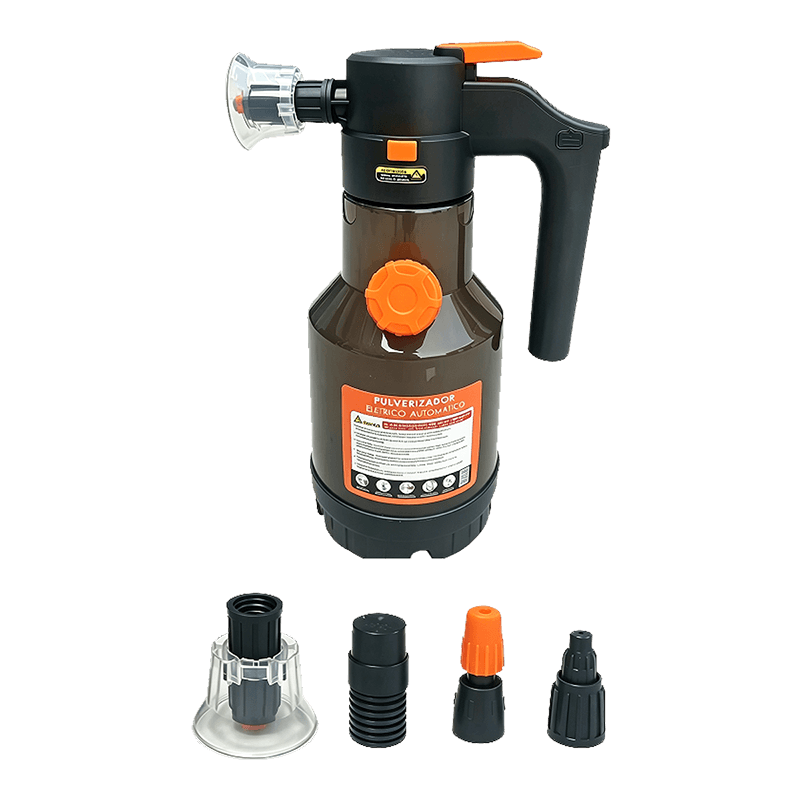
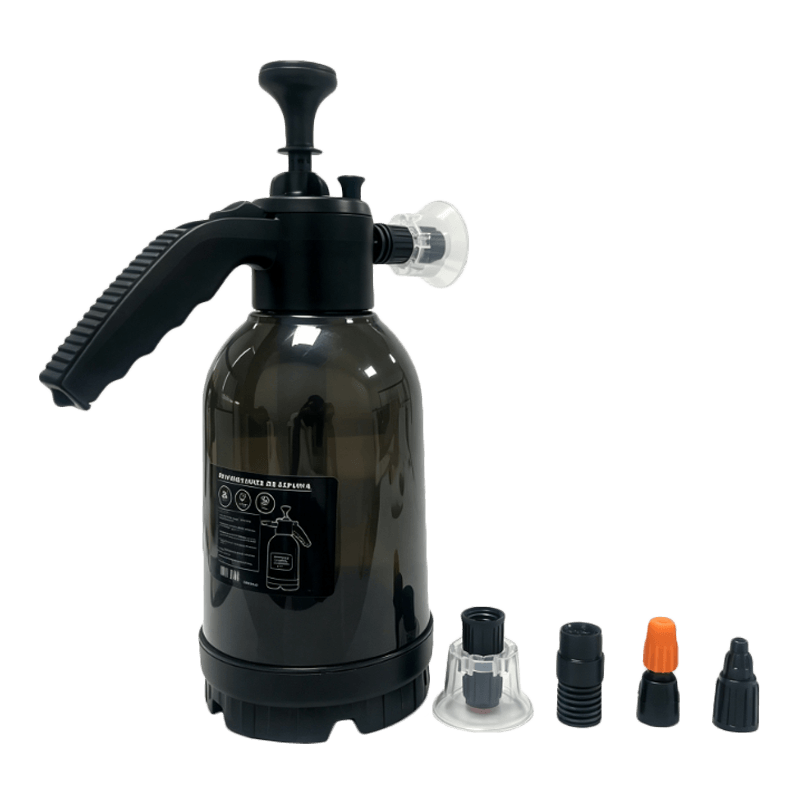
A representative configuration for a handheld rechargeable foam sprayer suited to car detailing and household cleaning is outlined below, illustrating the tank capacity, material, and functional features typical of this equipment category.
| Feature | Detail |
|---|---|
| Tank Capacity | 2 liters, supporting around 20 wash cycles per fill |
| Housing Material | Polypropylene (PP), resistant to common detergent chemistries |
| Power Source | Rechargeable lithium battery cell |
| Foam Output | Dense, slow-draining foam via layered generating screen |
| Nozzle Type | Adjustable, variable pressure spray pattern |
| Detergent Compatibility | Gentle and eco-friendly cleaning solutions |
Maintenance Habits That Preserve Foam Quality Over Time
Foam quality gradually declines if the generating screen becomes clogged with dried detergent residue or mineral deposits from hard water, so rinsing the screen with clean water after each session helps preserve consistent bubble density over the life of the device. Draining the tank fully between uses, rather than leaving diluted detergent sitting inside for extended periods, also reduces the chance of residue buildup inside the pump mechanism. Battery care follows similar logic to other rechargeable tools, where partial charging cycles rather than repeated full depletion tend to extend the usable lifespan of the lithium cell over months of regular use.
Habits That Extend Sprayer Lifespan
Rinse the foam screen with clean water after each session
Drain the tank fully rather than storing diluted detergent
Avoid letting concentrated cleaner sit unused for long periods
Charge in partial cycles rather than repeated full depletion
Store the unit in a dry location away from direct sunlight
What This Means for Water-Conscious Cleaning Habits
As municipal water restrictions become more common in drought-prone regions and households look for practical ways to reduce outdoor water consumption, the appeal of a tool that delivers the same or better cleaning outcome with a fraction of the water volume continues to grow. Battery-powered foam sprayers fit into this shift not by asking users to change their cleaning habits dramatically, but by changing how the cleaning solution is delivered, letting a smaller volume of water do more work through contact time rather than sheer quantity.

Recommended Products
Latest News
Contact Us
LET'S START COLLABORATING
Jialiang Electrical Appliance develops high-quality automotive and household products, including inflators, vacuum cleaners, bottle warmers, and small appliances. We aim to enhance daily life with innovative, user-focused solutions.
Product
Jump Starter and Air Compressor Solar LED Reflective Warning Triangle Light Wireless Mini Vacuum Cleaner Baby Milk Shaker Foam SprayerSTAY CONNECTED
 +86 13956690933
 [email protected]
[email protected]
 No. 67, Mojian Hill, Ditang Street, Yuyao City, Ningbo City, Zhejiang Province, China.
MOBILE
Copyright © Yuyao Jialiang Electrical Appliance Co., Ltd. All Rights
Reserved
 Custom Electric Household Appliances Manufacturers