


 русский
  Español
  عربى
عربى 


Your tires quietly lose 1 to 2 PSI every single month through normal air permeation — a slow, invisible leak that costs you fuel economy, tread life, and safety long before you notice anything is wrong. Having the best tire inflator for a car within reach changes that equation entirely. Whether you face a sudden flat on the highway or simply want to stay ahead of seasonal pressure drops, a quality portable inflator is one of the most practical tools any driver can own.
This guide breaks down everything you need to know: the different types of inflators available in 2025–2026, the key features that separate great units from disappointing ones, and a look at the top-rated models that have earned consistent praise from independent testers and real-world drivers alike.
Tire pressure is one of the most under-maintained aspects of vehicle ownership, yet its impact on safety is significant. In 2023 alone, 646 people died in tire-related crashes on U.S. roads — many of them preventable with proper inflation habits. Beyond safety, correctly inflated tires improve fuel efficiency, extend tread life, and ensure optimal handling in wet or emergency braking situations.
The convenience factor is equally compelling. Gas station air pumps are unreliable, often inaccurate, and may not be available when you need them most — at night, on a remote road, or in bad weather. A personal tire inflator eliminates that dependency. Cordless models especially have changed the game for car maintenance, offering true portability with no cords or outlets needed, meaning the inflator goes wherever you do — campgrounds, parking lots, bike trails, or even your driveway.
Types of Car Tire Inflators Explained
12V Plug-In Inflators
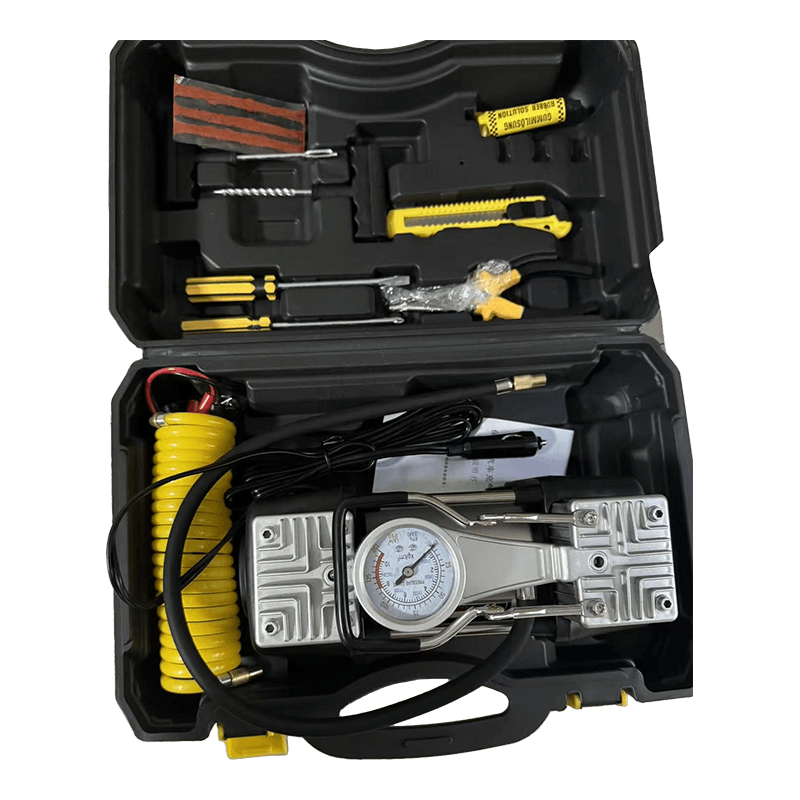
These units draw power from your vehicle's 12V accessory (cigarette lighter) outlet. They are the most reliable choice for roadside emergencies because they run as long as your car battery has charge — no dead battery risk, no time limit. 12V inflators that plug into the cigarette lighter are the most reliable for roadside emergencies; they're not the fastest, but they'll keep running as long as your car battery has juice. The trade-off is that they are slower than corded AC models and tether you to the vehicle.
Cordless Battery-Powered Inflators
Cordless inflators have surged in popularity. Rechargeable cordless inflators now represent over 50% of consumer purchases as of 2024, overtaking 12V plug-in models. They offer maximum flexibility for quick top-ups at home or on the go, but storage discipline matters. Roughly 15–20% of negative reviews on cordless units mention a dead battery when the unit is finally needed. If you choose a cordless model, commit to charging it every 3 months during storage.
Corded AC Inflators
Plugging into a standard wall outlet, AC inflators are the most powerful option — ideal for a garage setting where you need to inflate multiple tires quickly or handle higher-pressure applications like truck or RV tires. Their obvious limitation is that they are useless away from a power source, making them unsuitable as a primary road emergency tool.
Key Features to Look for in a Car Tire Inflator
Auto Shut-Off
An automatic shut-off function stops the inflator the moment it reaches your preset PSI target, preventing over-inflation. This is a must-have for safety and convenience — just program your target pressure, hit start, and let the inflator do the rest. Look for models with an accuracy rating of ±2 PSI or better.
Maximum PSI Output
Car tires typically require 32–35 PSI, but your inflator's maximum output matters for versatility. You need an inflator that can handle at least 150 PSI if you want versatility — your car tires only need 32–35 PSI, but what about your bike, motorcycle, or other equipment? Always check the difference between a unit's "free air" PSI rating versus its working pressure against real tire resistance, as cheaper units often fall short of their advertised specs under load.
Inflation Speed (CFM)
Speed is measured in cubic feet per minute (CFM) of airflow. Look for inflators that can pump at least 1–2 CFM if you want reasonable fill times — higher-end units can fill a standard car tire in 2–3 minutes, which is what you actually want. Beware of manufacturers that cite fill times from 30 to 35 PSI rather than from flat — real-world performance from zero is what counts during an actual emergency.
Digital Display and Preset Modes
A clear digital display lets you monitor current and target pressure at a glance, even at night. The best models include preset modes for different vehicle types. Mode options like Car, Motorcycle, Bicycle, and Ball allow the inflator to deliver a default pressure relative to each setting, stopping automatically once that pressure is reached.
Hose Length and Flexibility
A hose that is too short creates real problems, especially when the valve stem lands at the top of the wheel after parking. Short hoses under 12 inches cause problems in many valve positions, so look for flexible or coiled hose designs with at least 18 inches of reach. Some heavy-duty 12V models come with hoses of 13 feet or more, long enough to reach the rear tires of a large truck from the front accessory outlet.
Build Quality and Heat Management
The compressor's vibration is a major stress point. Look for units with solid metal components, especially the pump head and pressure fittings, as plastic threads strip easily. Equally important is thermal management: cheap compressors overheat after 10 minutes of use and shut down with thermal protection, while quality units have better cooling and can run longer.
Portability and Size
The best inflator is the one you actually keep in your car. For emergency use, compact size trumps raw power every time — you want something that fits in your trunk without taking up half the space. That said, avoid units so small they compromise performance. The sweet spot for most drivers is something roughly the size of a large water bottle or small shoebox.
Top Tire Inflators for Cars in 2025–2026
Fanttik X8 APEX — Best Compact Cordless Inflator
The Fanttik X8 APEX is the most consistently recommended compact cordless inflator across every major review outlet, including GearJunkie, Automoblog, and Outdoor Life. Its 7,800mAh battery pushes a standard car tire from 0 to 35 PSI in roughly one minute flat — the fastest in the compact category. On a full charge, the X8 APEX can handle up to four average-sized vehicle tires, 17 bike tires, 12 motorcycle tires, and nearly 90 balls. The bright digital display shows current and target pressure simultaneously, with ±2 PSI accuracy.
DeWalt 20V MAX Tire Inflator — Best Overall Power and Versatility
Rugged construction, versatility, and power earn the DeWalt 20V MAX Tire Inflator the title of Best Overall. It is the only cordless inflator reasonably capable of being used in both light vehicle and full-sized truck tires, and the only unit designed to also inflate rafts, paddleboards, and air mattresses. A 13-foot-long 12V cable fits into your vehicle's accessory outlet and is long enough to reach the rear tires of an extended cab F-250 from the dashboard — making it an excellent dual-mode option. Those already invested in the DeWalt 20V ecosystem will find it especially compelling.
AstroAI Portable Car Air Compressor — Best Budget Option
Ease of use, respectable performance, and a good price point earn the AstroAI Handheld Cordless Air Compressor the pick for best budget inflator. It boasts a 20V 36Wh Li-ion battery with a USB port for charging small electronics in an emergency. In independent testing, it inflated a 215/70 R16 tire from 10 PSI to 45 PSI and also managed a ¾-ton truck tire from 20 to 60 PSI in under 19 minutes — well outside its intended scope but impressive nonetheless.
Avid Power Tire Inflator — Best for Speed
With the ability to refill a tire in just under three minutes, the Avid Power Tire Inflator is one of the fastest inflators tested, beating out more expensive models from more established brands. It supports both AC and 12V power sources, includes USB ports and an emergency light, and comes with a comprehensive accessory case. Its drill-style ergonomics also make it easier to maneuver into tight spaces around wheel wells.
Slime Cordless Inflator — Best Compact Backup Unit
Slime's cordless inflator is best for one-off bead leaks, punctures from a nail, or seasonal temperature changes that result in slight to moderate pressure loss. In a worst-case scenario, it can fill a standard car tire from flat in about six minutes. Its smaller size means it stashes nicely in the trunk or behind the seat. It also works on bikes, balls, and pool inflatables, making it a versatile companion for outdoor adventures.
How to Use a Car Tire Inflator Safely
- Check your recommended PSI first. Find the correct tire pressure on the sticker inside your driver's door jamb or in your owner's manual — not on the tire sidewall, which lists the maximum pressure, not the recommended one.
- Remove the valve cap and attach the inflator hose securely. An improperly seated chuck will bleed air and give you false pressure readings.
- Set your target PSI before starting. Use the digital controls to program the desired pressure so the auto shut-off can do its job.
- Run the inflator and monitor progress. Avoid running budget units continuously beyond their rated duty cycle (often 10 minutes) to prevent thermal shutdown or damage.
- Verify the final pressure with a standalone gauge. Cross-checking with a quality tire gauge periodically ensures your inflator's digital readout remains accurate over time.
- Replace the valve cap. This small step protects the valve stem from dirt and moisture.
Tire Inflator vs. Tire Pressure Gauge: Do You Need Both?
Yes. A tire inflator and a pressure gauge serve different functions. While most modern inflators include a built-in digital gauge, independent pressure gauges offer a useful cross-check. Inflator gauges can drift in accuracy over time, particularly in budget models. A dedicated stick or digital gauge stored in your glove compartment is a cheap insurance policy against over- or under-inflation errors. Think of the inflator as the tool that does the work and the gauge as the tool that verifies the result.
Cordless vs. 12V: Which Is Right for You?
The choice between cordless and 12V ultimately comes down to your primary use case:
- Choose a 12V model if your main concern is roadside emergency reliability. You will never be stranded by a dead battery, and the power supply is inherently tied to a working vehicle.
- Choose a cordless model if you frequently need to top up tires at home, in parking lots, or away from your car. Just commit to regular charging — storing a cordless inflator uncharged for months is the most common cause of failure at the worst possible moment.
- Consider a dual-mode model (like the Avid Power or DeWalt 20V MAX) if you want both convenience and reliability without buying two separate units.
Final Thoughts
The best tire inflator for a car is not necessarily the most powerful or the most expensive — it is the one you will actually carry and use consistently. Inflation speed, accuracy, auto shut-off, portability, and build quality are the factors that matter most. For most drivers, a compact cordless unit like the Fanttik X8 APEX covers everyday needs beautifully. Power users, truck owners, or those who frequently travel off-road will find the investment in a DeWalt 20V MAX worthwhile. And anyone on a tight budget can rely on the AstroAI to deliver solid performance without breaking the bank.
Whatever you choose, keep it in your car, charge it regularly, and check your tire pressure at least once a month. That simple habit, backed by the right tool, is one of the easiest ways to stay safe and save money on the road.


 +86 13956690933

 No. 67, Mojian Hill, Ditang Street, Yuyao City, Ningbo City, Zhejiang Province, China.
