


 русский
 Español
 عربى

Dead Animal Smell in Car: How to Find the Hidden Source and Remove the Odor for Good
 2026.10.09
 Industry News
Content
- 1 What the Smell Tells You Before You Open Anything
- 2 Where Animals Actually Hide in a Car
- 3 How to Find the Source Without Taking the Car Apart
- 4 Removing the Carcass Safely
- 5 Clearing the Odor From the Cabin and the Vents
- 6 When the Smell Keeps Coming Back
- 7 Keeping Animals Out of Your Car
- 8 A Small Kit That Makes the Next Cleanup Easier
- 9 Frequently Asked Questions
Few things ruin a commute faster than a dead animal smell in your car. It appears suddenly, it does not fade, and it follows you everywhere: through the vents, into your clothes, and onto anything you leave in the cabin. We hear about this problem often in our work with car-care appliances, and it is almost always described the same way. Nobody can find the source, and everybody can smell it.
The good news is that dead animal odor behaves in a fairly predictable way. Once you understand how it moves through a vehicle, finding and fixing it becomes a matter of method rather than luck. This guide covers what the smell tells you, where to look first, how to remove the carcass safely, and how to clear the odor from the vents and upholstery for good.
What the Smell Tells You Before You Open Anything
A decomposing animal inside a vehicle produces an odor most people describe as a mix of spoiled meat, mold and sewage. In warm weather it often carries a sharp, sour edge that seems to sit at the back of your throat. Because the animal is usually small and well hidden, the smell is often the only evidence you get.
Two patterns are worth paying attention to. The first is intensity. The odor usually peaks within the first week and then slowly weakens as the tissue dries out, but the oils and bacteria left behind soak into foam, carpet and insulation. That is why a car can smell fine on a cool morning and unbearable after an hour in the sun.
The second is distribution. If the smell spikes when you switch the blower on, the source is probably somewhere in the ventilation path: the cabin air filter, the ductwork or the blower housing. If it stays constant whether the fan runs or not, look at the cabin itself, the trunk and the engine bay.
Where Animals Actually Hide in a Car
Vehicles offer far more hiding places than most owners expect. The table below lists the spots where small animals most often end up, together with the clue that usually points to each one.
| Location | Typical clue | Inspection difficulty |
|---|---|---|
| Cabin air filter | Odor strongest through the vents; fur or droppings on the pleats | Easy |
| HVAC ductwork and blower housing | Smell increases sharply when the fan is on | Moderate |
| Engine bay and air intake | Odor under the hood, nesting material near wiring | Moderate |
| Behind the glovebox and dashboard | Odor concentrated on the passenger side, worse with windows shut | Moderate to hard |
| Trunk, spare-tire well and rear panels | Smell from the back of the car, stronger in warm weather | Moderate |
| Under the seats and in the seat rails | Odor near floor level, visible debris in the tracks | Easy to moderate |
| Door panels and roof lining | Odor isolated to one door, worse when that window opens | Hard |
If you only have time to check one thing, check the cabin air filter. It takes minutes to reach on most models, it sits directly in the airflow, and it is the single most common place for a small animal to end up in the ventilation path. It is also the cheapest possible source to rule out.
How to Find the Source Without Taking the Car Apart
Random dismantling rarely solves this problem. Work through the following steps in order and you will usually narrow the smell down to one area within an hour.
- Pull the cabin air filter and inspect it in daylight. Fur, staining, droppings or a strong odor on the pleats means you have found at least part of the problem.
- Run the ventilation test. With the windows closed, set the fan to its highest speed, move the temperature through its full range, and switch between fresh air and recirculation. Note where the smell becomes strongest.
- Work section by section with your nose. Sniff at each vent, along the seat bases, in the footwells, in the trunk and around the spare-tire well. Close the doors between checks so the air does not reset.
- Look for physical evidence: small dark droppings, shredded insulation, nesting material, grease marks along plastic trim.
- Borrow or buy an inexpensive inspection camera. A simple USB endoscope slides into duct openings, behind the glovebox and into fender cavities without removing a single panel.
- Only start dismantling once the smell points clearly to one spot. If nothing turns up, consider that the odor may not be an animal at all: spilled milk, a damp carpet, a blocked A/C drain or mold can all imitate it.
Removing the Carcass Safely
Once you have located the animal, get it out as soon as you can. Speed matters, because every extra day pushes more oil and bacteria deeper into the materials around it.
- Put on disposable gloves and a mask before you begin, and open the doors so air can move through the cabin.
- Slide a plastic bag over the carcass, close the bag around it, then double-bag and seal it. Never handle a decomposing animal with bare hands.
- Remove anything it was nesting in, including leaves, shredded insulation, paper and fabric, and dispose of it the same way.
- Wash the area with an enzyme-based cleaner rather than a plain detergent, then dry it thoroughly. Moisture left behind invites mold and keeps the odor alive.
- Clear droppings, fur and fine debris from carpets and crevices. A compact vacuum with a narrow nozzle reaches into seat rails and trunk corners far better than a household machine.
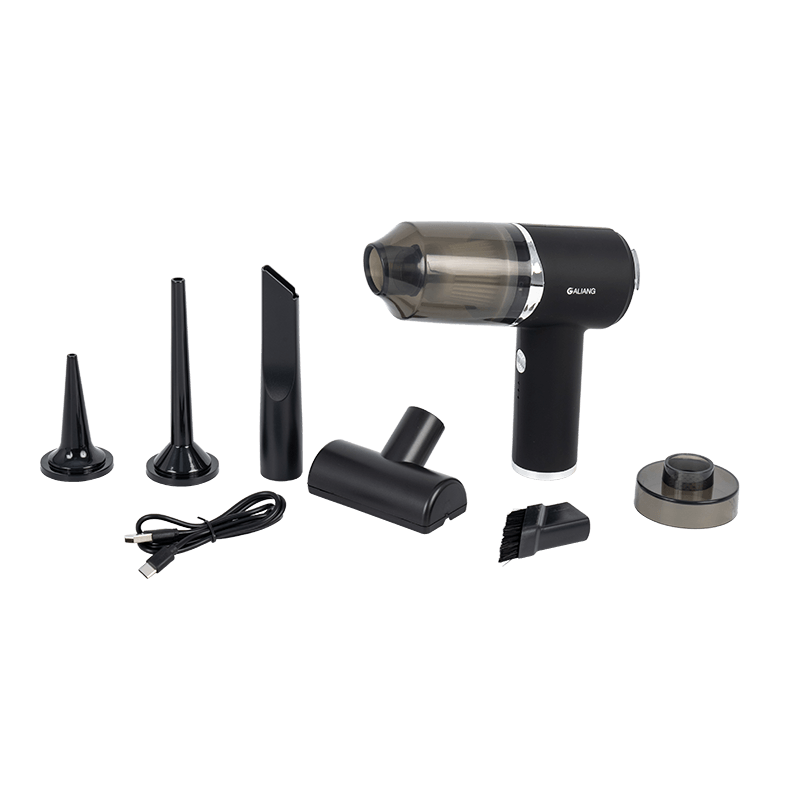
 JL-003 Portable Wireless Mini Vacuum Cleaner for CarA lightweight cordless mini vacuum for car interiors, useful after removing a trapped animal; 120W suction and Type-C charging simplify debris cleanup.View Product →
Small cordless units are handy here because you can move around the car without dragging a cord or hunting for a power socket, and because the narrow crevice tools are designed for exactly the sort of debris a nesting animal leaves behind. If you want a closer look at how these machines handle fine dust and crumbs, our overview of car and home vacuum cleaners covers the basics.
Clearing the Odor From the Cabin and the Vents
Removing the animal solves most of the problem, but the smell tends to linger for a while. The sequence below works best.
- Replace the cabin air filter. No amount of spray will fix a filter that is soaked with odor.
- Clean every surface the animal touched with an enzyme cleaner, including plastic trim and rubber seals.
- Leave an open container of activated charcoal or baking soda in the cabin for several days. These absorb odor instead of masking it.
- Run the fan on high with recirculation off and the windows cracked for fifteen to twenty minutes after cleaning, so the ductwork can air out.
- For stubborn cases, use an ozone generator strictly according to its instructions, with no people or pets inside and a thorough airing afterwards.
Two popular home remedies deserve a caution. Coffee grounds and bowls of vinegar mask a smell rather than remove it, so treat them as a temporary measure while the real cleaning continues. And never pour liquid deodorizer directly into a vent; it can reach the blower motor or electronic components.
When the Smell Keeps Coming Back
An odor that returns weeks later almost always means residual oils have soaked into a porous material: seat foam, carpet underlay, trunk lining or the blower housing. In that situation, replacing the inexpensive part is usually cheaper than repeated treatments. A new filter, a fresh section of underlay or a replacement trunk liner often ends the problem permanently, while sprays only postpone it.
Keeping Animals Out of Your Car
Prevention is mostly about removing reasons for an animal to settle in and closing the routes it uses to get there.
- Park inside a garage when you can. Long-term outdoor parking, especially near fields or woodpiles, is an open invitation.
- Seal obvious gaps around wiring pass-throughs, vent openings and the fresh-air intake.
- Do not store pet food, birdseed or snacks in the cabin or the trunk.
- Check under the hood, around the wipers and near the intake before a seasonal start-up, particularly after a long park.
- Keep the interior clean. Crumbs are a food source, and a tidy car is a less attractive den.
- If your model has been targeted before, fit a fine mesh screen over the fresh-air intake.
A Small Kit That Makes the Next Cleanup Easier
After a job like this, most drivers realize how little gear they keep in the car. A compact vacuum, a small tire inflator, a flashlight and a spare cabin filter cover almost every roadside situation, and they all fit in the space a single spare wheel used to occupy. If you would rather carry fewer tools, a combined inflator and vacuum unit handles both the tire side and the cleanup side in one box.
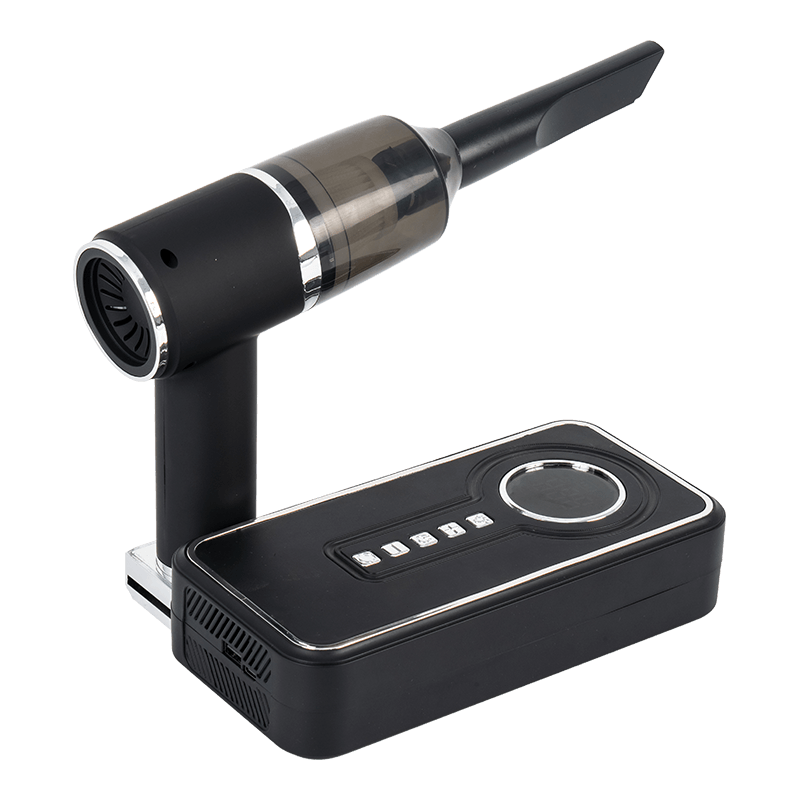
 JL-005 Car-Mounted Air Pump and Vacuum Cleaner ComboA compact 3-in-1 car tool for inflation, vacuuming, and emergency lighting, with 6000mAh battery and 120W vacuum for roadside cleanup.View Product →
Frequently Asked Questions
How long does a dead animal smell last in a car?
Left alone, the odor often softens noticeably within two to four weeks as the carcass dries, but residues can return for months whenever the interior heats up. Removing the source and cleaning the surface shortens the whole process to a few days.
Can I drive with a dead animal in my car?
You can, but it is not advisable. Decomposition attracts insects, and the longer the carcass stays, the deeper the odor settles into foam and fabric.
Will the smell go away on its own?
Sometimes, if the animal was in a well-ventilated place such as the engine bay. Inside the cabin, it rarely disappears completely without help.
Is it dangerous to handle the carcass myself?
Any decomposing animal carries bacteria, and rodents can transmit disease. Wear gloves and a mask, avoid direct contact, double-bag the remains and wash your hands afterwards. If you have a respiratory condition, ask someone else to handle the removal.
A dead animal smell in a car is one of those problems that feels enormous and usually turns out to be smaller than expected. Find the source, remove it carefully, clean with an enzyme product, replace the cabin filter, and give the interior time to air out. In the great majority of cases, that is the whole job.
We build car-care appliances such as vacuums, tire inflators and emergency warning lights for drivers and for the brands that supply them, so questions like this one come up constantly in our conversations with customers. If you are sourcing car-care products for your own market, feel free to contact our team; we are always glad to talk through what actually holds up in a vehicle.

Recommended Products
Latest News
Contact Us
LET'S START COLLABORATING
Jialiang Electrical Appliance develops high-quality automotive and household products, including inflators, vacuum cleaners, bottle warmers, and small appliances. We aim to enhance daily life with innovative, user-focused solutions.
Product
Jump Starter and Air Compressor Solar LED Reflective Warning Triangle Light Wireless Mini Vacuum Cleaner Baby Milk Shaker Foam SprayerSTAY CONNECTED
 +86 13956690933
 [email protected]
 No. 67, Mojian Hill, Ditang Street, Yuyao City, Ningbo City, Zhejiang Province, China.
MOBILE
Copyright © Yuyao Jialiang Electrical Appliance Co., Ltd. All Rights
Reserved
 Custom Electric Household Appliances Manufacturers