


 русский
 Español
 عربى

Newborn bottle temp: Applications, Selection Criteria, and Practical Guidance
 2026.11.17
 Industry News
Content
Every new parent has been there: your baby is hungry, the bottle is ready, and the quiet panic begins. Is it too hot? Too cold? Exactly right? The newborn bottle temp question goes beyond preference. It affects feeding comfort, nutrient preservation, and safety. As a small appliance manufacturer focused on family and car products, we have spent time thinking about how to make feeding simpler. Let’s walk through the practical steps of getting the bottle temperature right.
What Is the Ideal Newborn Bottle Temperature?
Many sources describe the ideal newborn bottle temp as being close to your body temperature, around 98.6°F (37°C). This is the natural temperature of breast milk. That said, you may not need to be exact. Some babies are perfectly happy with room-temperature formula, provided it was prepared safely.
There is a big difference between breast milk and formula when it comes to temperature. Powdered formula requires water that is at least 158°F (70°C) to kill potential bacteria. After mixing, you must cool the bottle to a feeding temperature. This means "warm" has a safety meaning, not just a comfort meaning.
Breast milk is more delicate. High temperatures can destroy enzymes, antibodies, and vitamins. Heating breast milk above 104°F (40°C) may reduce its nutritional value. So the safest way to warm refrigerated breast milk is gently and slowly.
Safe Ways to Warm a Newborn Bottle
There are several tested methods. The most common is a warm water bath. Place the bottle in a bowl or basin of warm water for up to 15 minutes. The water should be comfortably warm to the touch, roughly around 100°F (38°C). If it feels too hot for your hand, it’s too hot for the bottle. Keep an eye on the water level, and don't let it cool down too quickly or become too hot. After enough time, swirl the bottle gently to even out the temperature.
A stovetop method works similarly, but you must be even more careful. A pan of water can heat quickly, so remove the bottle as soon as it reaches the desired warmth. Never let the water boil.
Electric bottle warmers are designed specifically for this task. They maintain a steady low temperature and remove most of the guesswork. Some baby bottle shakers also include constant-temperature modes, combining mixing and warming in one step. This is especially useful for parents who are preparing formula late at night.
Microwaves are not recommended. They heat liquids unevenly, leaving dangerous hot spots that can burn a baby’s mouth. Even after swirling and testing, you might miss a pocket of hot milk. For this reason, it's better to avoid microwaves entirely.
How to Test the Bottle Temperature Before Feeding
The classic wrist test is simple and effective. Shake a few drops of milk onto the inside of your wrist. If it feels neutral, neither hot nor cold, the temperature is likely just right. Your wrist skin is sensitive and gives a reliable approximation of what a baby's mouth will feel.
If you prefer a more precise check, use a bottle thermometer or any food thermometer. Insert it into the milk and look for a reading between roughly 98.6°F and 100°F (37–38°C). For breast milk, do not exceed 104°F (40°C).
Another simple way is to squeeze a small amount onto your forearm or the back of your hand, though the wrist is the most common. The key is to avoid testing directly from the nipple, because the first drop can be misleading.
Resist the urge to test with your mouth or fingertip. The mouth is less sensitive than the wrist, and it introduces bacteria. The fingertip is not a good judge of temperature, either.
If you prepared formula with hot water at 70°C, you must cool it thoroughly. The wrist test may not catch an internal hot spot. Hold the bottle under cool running water, or place it in a cool water bath, and then test again.
Breast Milk vs. Formula: Different Rules
The core difference is how you get to the feeding temperature. Breast milk needs gentle warming; formula needs hot water and then cooling. The table below summarizes the differences.
| Type | Feeding temperature | Maximum safe temperature | Preparation note |
|---|---|---|---|
| Breast milk (frozen or refrigerated) | Around 98.6°F (37°C) | Do not heat above 104°F (40°C) | Warm gently in a bottle warmer or water bath |
| Powdered formula | Around 98.6°F (37°C) after cooling | Mix with water at 158°F (70°C) | Cool immediately after mixing, then test |
| Ready-to-feed formula | Room temperature to body temperature | No high-temperature preparation required | Warm gently if desired, or serve as is |
In every case, newborn bottle temp is a target that balances comfort with safety. For formula, the order matters: hot water first, then cool down. For breast milk, the process is a slow, steady warm-up that preserves nutrients.
For breast milk, a continuing concern is that high heat can also affect the fat content and create a separation that changes how the milk flows through the nipple. Gentle warming with occasional swirling helps maintain an even texture.
Common Bottle-Warming Mistakes to Avoid
- Using a microwave.
- Leaving the bottle in warm water longer than 15 minutes.
- Reheating leftover milk after a partial feed.
- Testing the temperature with your own mouth.
- Skipping the swirl before testing.
- Using boiling water to warm a bottle.
Each of these mistakes can turn a routine feeding into a stressful event or even a safety hazard. Taking an extra minute to avoid them is worth it.
How a Constant-Temperature Bottle Shaker Can Simplify Feedings
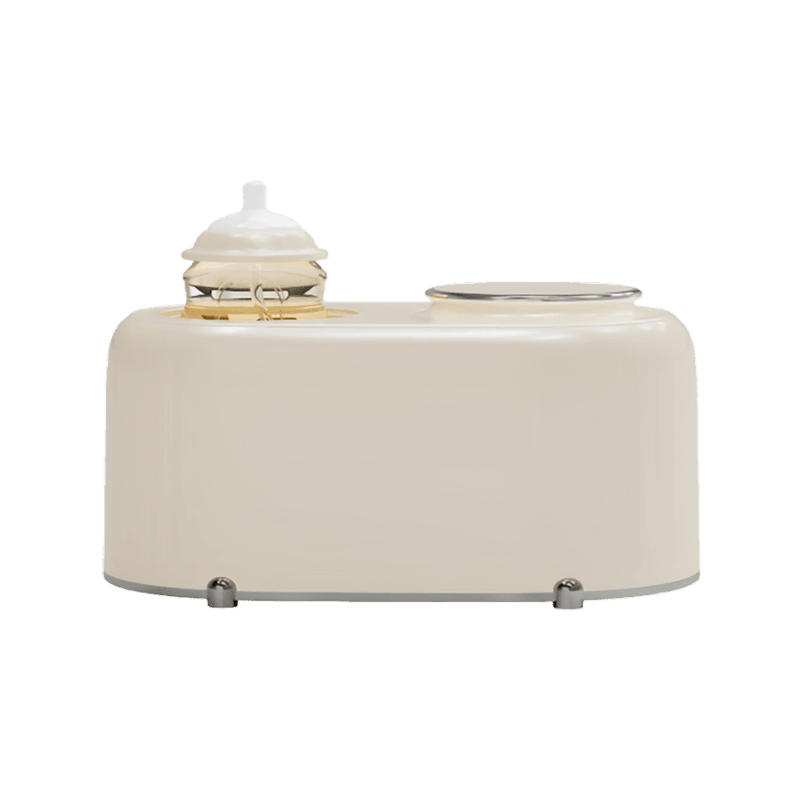
 Intelligent Constant-Temperature Baby Bottle ShakerThis smart shaker maintains a steady temperature while mixing formula or breast milk evenly, preventing lumps and hot spots for safer, calmer feedings.View Product →
At Yuyao Jialiang Electric Appliance, we design small household appliances with daily routines in mind. Our team understands that a crying baby doesn't care about precise temperature math; it just wants food. That’s why we developed an intelligent constant-temperature baby bottle shaker. It mixes formula or breast milk evenly while holding the temperature steady, which reduces lumps and hot spots.
This device is intended for parents who want a reliable way to prepare bottles, especially during night feedings or when they are multitasking. The constant-temperature feature means you don’t have to guess or re-test as often. The gentle shaking motion also helps powdered formula dissolve without excessive bubbles, which can reduce gas discomfort for some newborns.
During the first few weeks, many parents wake up multiple times each night. Having a machine that handles both mixing and warming can cut down the time between the first cry and a ready bottle.
We manufacture and test these shakers in Yuyao, China, an area known for a strong home appliance supply chain. That proximity allows us to respond quickly to what parents tell us. It also means the device is built with practical details like simple controls and easy cleaning in mind.
There is no single perfect newborn bottle temp that works for every baby. But you don’t need to be perfect. Aim for body temperature, protect breast milk from excess heat, and cool formula properly after preparation. Use a warming method that fits your schedule, avoid the microwave, and trust the wrist test.
If you want to learn more about mixing and warming in one convenient step, check out our guide on baby formula mixers and bottle warmers. And if you have questions about our feeding products, contact our team. We are always glad to help parents make feeding time a little easier.

Recommended Products
Latest News
Contact Us
LET'S START COLLABORATING
Jialiang Electrical Appliance develops high-quality automotive and household products, including inflators, vacuum cleaners, bottle warmers, and small appliances. We aim to enhance daily life with innovative, user-focused solutions.
Product
Jump Starter and Air Compressor Solar LED Reflective Warning Triangle Light Wireless Mini Vacuum Cleaner Baby Milk Shaker Foam SprayerSTAY CONNECTED
 +86 13956690933
 [email protected]
 No. 67, Mojian Hill, Ditang Street, Yuyao City, Ningbo City, Zhejiang Province, China.
MOBILE
Copyright © Yuyao Jialiang Electrical Appliance Co., Ltd. All Rights
Reserved
 Custom Electric Household Appliances Manufacturers